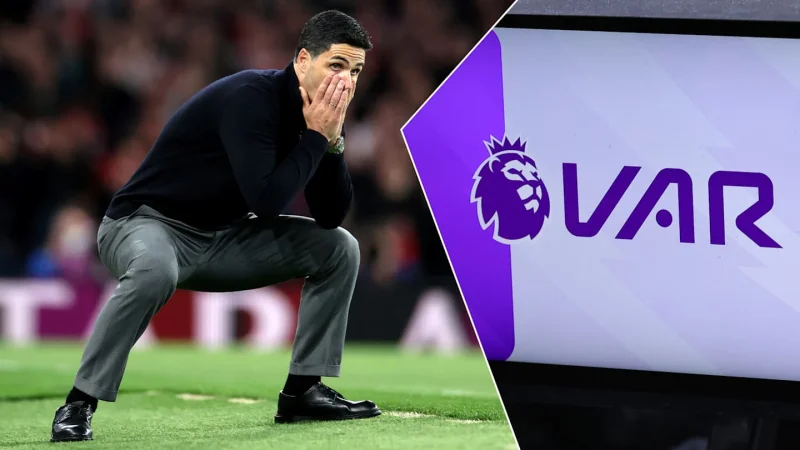
The Premier League has reportedly concluded that Manchester City should have conceded a penalty in their 3-3 draw with Everton at the Hill Dickinson Stadium earlier this month, in a call that has reignited debate over how far VAR can go when the contact is judged to have ended before the ball is in play.
The incident came in the 85th minute, when Bernardo Silva was marking Merlin Röhl at an Everton corner and Röhl was tugged to the ground. Referee Michael Oliver did not see the contact, and VAR Paul Howard reviewed the footage before deciding any foul had concluded by the time the ball was in play. Everton were leading 3-2 at the time, and a penalty could have sealed the match before Jérémy Doku later struck for Manchester City to level it at 3-3.
The Premier League’s Key Match Incidents panel then unanimously took the opposite view, saying there was a clear, sustained holding offence that continued as the corner was taken and the ball came into play. The panel, made up of five members who act as the league’s independent, retroactive arbiters of officials’ decisions, effectively backed Everton’s complaint and put fresh pressure on the process that left the original no-penalty call standing.
David Moyes did not hide his frustration after the match. “If that doesn’t get given as a penalty, then it’s an absolute free-for-all from now on,” he said, adding that he might have to start coaching his defenders “how to defend differently completely.” He also said the episode made it look as though players were now allowed to “grapple and wrestle on the ground,” and called the outcome “absolutely amazed.”
The decision mattered beyond the final score because a City loss would have left the club six points behind Arsenal with only one game in hand, a gap that would have sharpened the title race at this stage of the season. Instead, the draw kept City in touch, while Everton were left with the feeling that the man city everton var decision denied them a chance to finish the job on home turf.
What makes the ruling sting is the split between what the officials saw in real time and what the league’s review panel later found in the footage. Oliver missed the hold on the field. Howard judged the foul over before play resumed. The panel said it was still happening. That gap now sits at the center of the argument over whether the current threshold for intervention is too narrow when a set-piece battle turns into a decisive moment.