


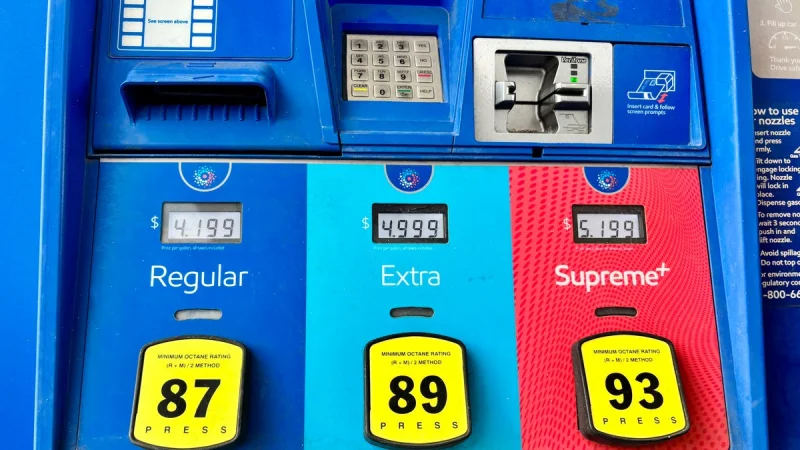
Gov. Tony Evers is not moving to suspend Wisconsin’s gas tax, even as gas tax holiday talk spreads from state to state and some lawmakers begin to entertain a federal version of the idea. Asked on May 11 whether he was considering a holiday at the pump, Evers said, “where we are now is a good place.”
That answer came as Georgia, Indiana and Utah have paused or reduced their state gasoline taxes, a move that has renewed pressure on other governors facing angry drivers and stubbornly high prices. In Wisconsin, though, the governor cannot simply order a holiday. State law would require legislation in the Capitol and his signature, and no lawmaker has introduced a bill.
The issue landed in Wisconsin just as a $1.8 billion tax relief and school funding deal failed to pass in a special session this week, leaving lawmakers with another visible sign that relief is hard to deliver through the Capitol. Joel Brennan recently pitched a 30-day gas tax holiday, while Milwaukee County Executive David Crowley dismissed the idea in a WISN-TV interview and said the revenue is needed for local infrastructure.
Wisconsin’s gas tax is 30.9 cents per gallon and has been in place in some form since 1925, when the state first enacted a levy of 2 cents per gallon. In the 1980s, lawmakers created a formula that adjusted the tax each year based on changes to the Consumer Price Index, but a 2005 law repealed it. The rate has not changed since 2006. A 2025 analysis from the Tax Foundation ranked Wisconsin’s gas tax 20th-highest in the nation, behind California and Illinois.
That tax is not a small line in the budget. It is the largest source of revenue for Wisconsin’s transportation fund, which pays for highways, roads, bridges and other infrastructure. In 2023-24, the gas tax made up nearly 37% of the money going into the fund and brought in more than $1 billion. In March 2026 alone, drivers paying the gas and diesel tax generated more than $81 million for the fund.
The federal piece of the debate is part of the same political current. The federal gas tax is 18.4 cents per gallon and the federal diesel tax is 24.3 cents per gallon, and some bipartisan support is emerging for halting the federal tax as prices remain high at the pump. Wisconsin lawmakers have been down this road before: Republicans pitched a gas tax suspension in 2005, but the bill did not pass.
That proposal would have paused the tax for 30 days, given the governor the option to extend the break for another 30 days through an executive order, and phased the tax back in gradually. The state Department of Transportation estimated the plan would have created a $214 million gap in the transportation fund over two years if the tax were paused for 60 days and then restored slowly. The Legislative Reference Bureau could not find a time in state history when the gas tax was suspended.
Wisconsin has tried a different kind of tax holiday before. In 2018, it held a sales tax holiday on back-to-school items in early August. But on fuel, the path is narrower, the math is harsher and the politics are still not there. Without a bill, the gas tax holiday talk in Wisconsin is just that.
