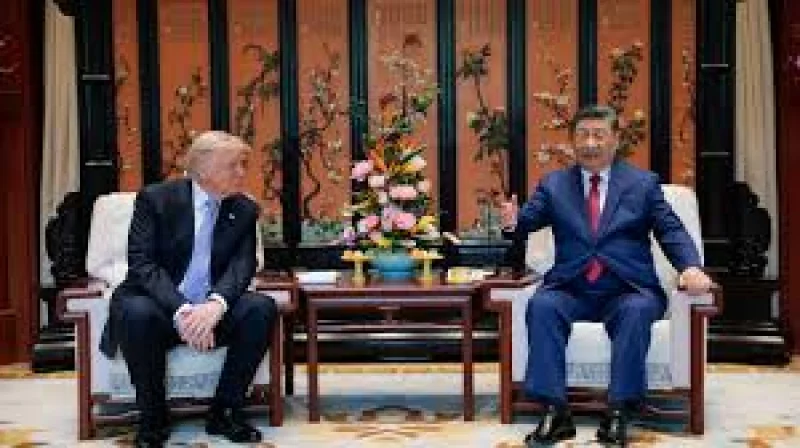
Donald Trump spent day one of his summit in Beijing sounding almost restrained. He arrived at the Great Hall of the People on Thursday morning, praised China as beautiful and then sat through a day of ceremony and warnings in which Xi Jinping made clear that Taiwan remains the most dangerous issue between the two powers.
Trump and Xi met for two hours around a giant table after a warm handshake and a walk down a red carpet lined with martial music, troops with bayoneted rifles, ceremonial uniforms and a 21-gun salute. Trump stopped to applaud children waving bouquets of flowers and US flags. He had predicted before landing that Xi “will give me a big, fat hug,” but the greeting stayed formal, if cordial.
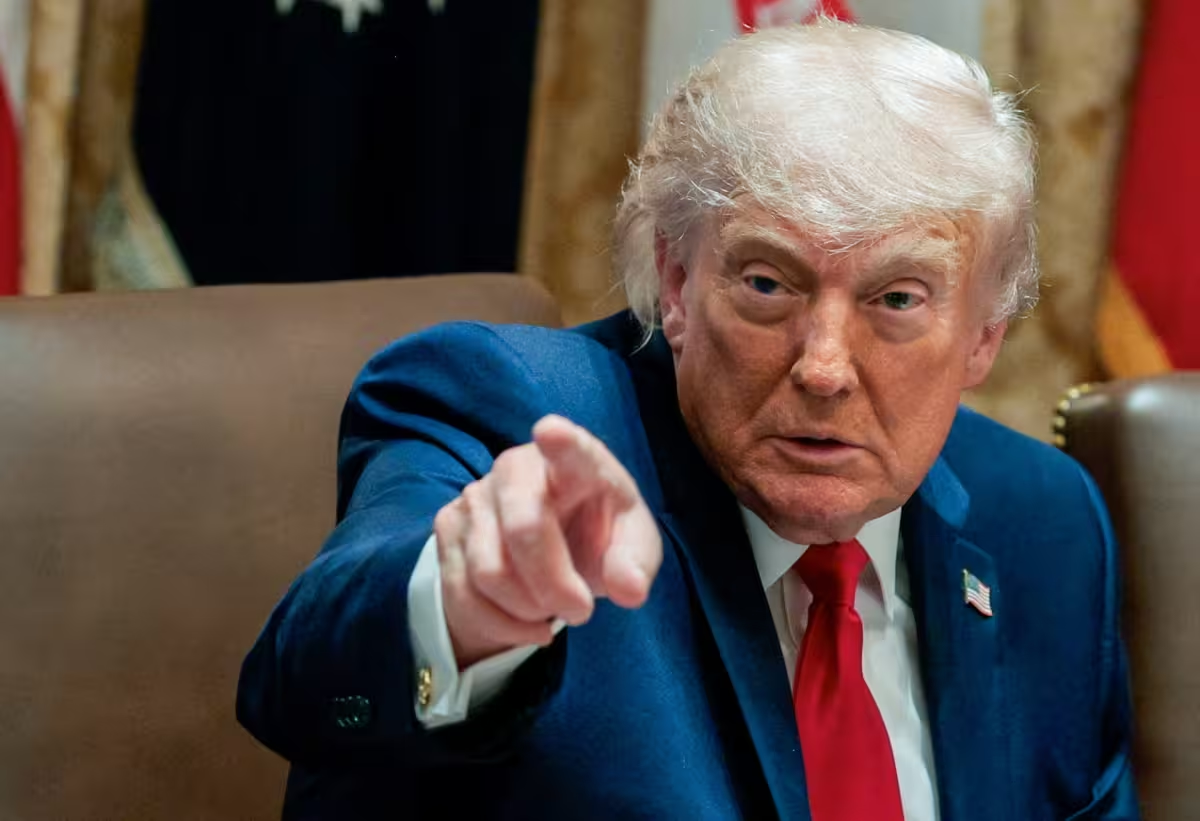
The numbers and the staging did the heavy lifting. Trump did not speak to reporters on the long Air Force One flight. He did not post about the meeting with Xi on Truth Social. And when he finally did speak in person, he told the Chinese leader, “You’re a great leader. Sometimes people don’t like me saying it, but I say it anyway, because it’s true. I only say the truth … It’s an honour to be your friend.” At the state banquet later in the Great Hall, Xi toasted that “the great rejuvenation of the Chinese nation and making America great again can go hand in hand,” while Trump took a sip of wine and offered remarks that were mild and meek by his usual standards.
That tone mattered because Trump has long treated foreign leaders, especially democratic ones, with far less caution, and because the contrast with his own political theatre at home is hard to miss. In 2024, he organized a military parade in Washington on his own birthday, 14 June, projecting power for an audience back home. In Beijing, by contrast, he spent Thursday keeping his voice down while Xi used the stage to underline where the real danger lies: Taiwan. Xi said that if the issue is handled poorly, “the two countries will collide or even clash, putting the entire US-China relationship in an extremely dangerous situation.” Trump ignored reporters who shouted questions about Taiwan as he moved through the ceremony.
By the end of the day, the message from Zhongnanhai was hard to mistake. Trump was treated with pomp, but Xi used that pomp to press his central demand: no misstep on Taiwan, no public confrontation, and no illusion that the relationship can be managed casually. The remaining question is whether Trump’s unusual deference in Beijing signals a real opening for calmer talks, or only a pause before the sharper fight over Taiwan resumes.