


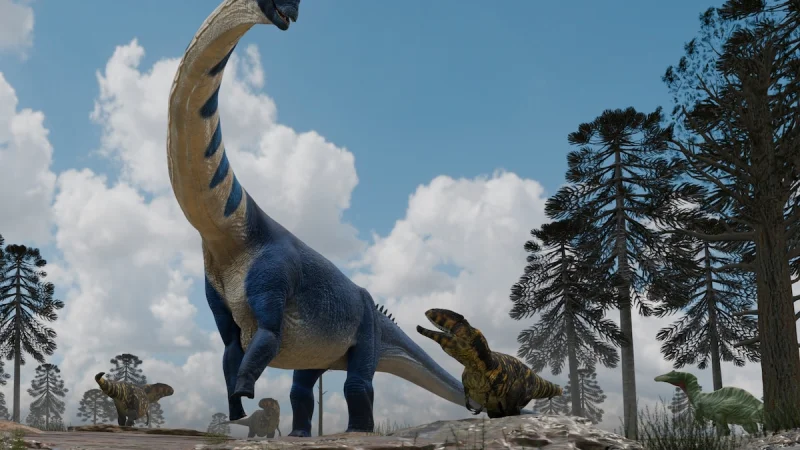
Paleontologists have identified a new long-necked dinosaur from northeastern Thailand, a giant called Nagatitan chaiyaphumensis that lived about 113 million years ago and may have stretched more than 88 feet from head to tail. The fossil remains were first uncovered in 2016 by Thanom Luangnan in Chaiyaphum Province, and the discovery was announced Thursday in Scientific Reports.
Researchers estimate the animal weighed nearly 30 tons, putting it among the largest dinosaurs known from Southeast Asia. Sita Manitkoon said the first measurements of the bones suggested the animal could be the largest dinosaur ever found in the region.
The remains were entombed in 113-million-year-old rock and include vertebrae, ribs, hip bones and limb bones. Pedro Mocho said it is the most complete sauropod specimen discovered from the Khok Kruat Formation, where earlier big dinosaurs had been known mostly from fragments rather than anything close to a full skeleton. The find gives researchers a stronger picture of what lived in Thailand during the Early Cretaceous, when the country sat closer to the equator than it does today.
Nagatitan belonged to the somphospondyli, a group of sauropods with long forelimbs and a wide stance. Scientists say sauropod dinosaurs evolved giant body sizes more than 30 times over more than a hundred million years on at least six landmasses, and they place this animal at the start of a period when conditions favored enormous growth. The same formation suggests the region was covered by relatively open, slightly dry shrublands, a setting that may have helped support such giants.
Thanom said he noticed strange-looking rocks on the banks of a public pond, and that chance sighting led to one of the most important dinosaur finds yet in Thailand. The discovery adds more than a name to the fossil record. It helps show how changes in ancient climate and vegetation opened the door for gigantic dinosaurs to develop.
For a fuller account of the Thai find, see New Dinosaur Species Thailand Revealed as Giant Nagatitan Fossils at
