

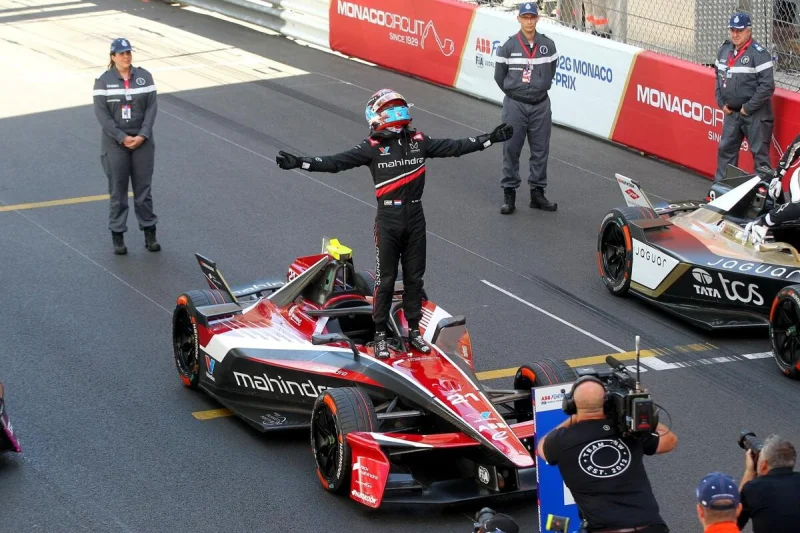
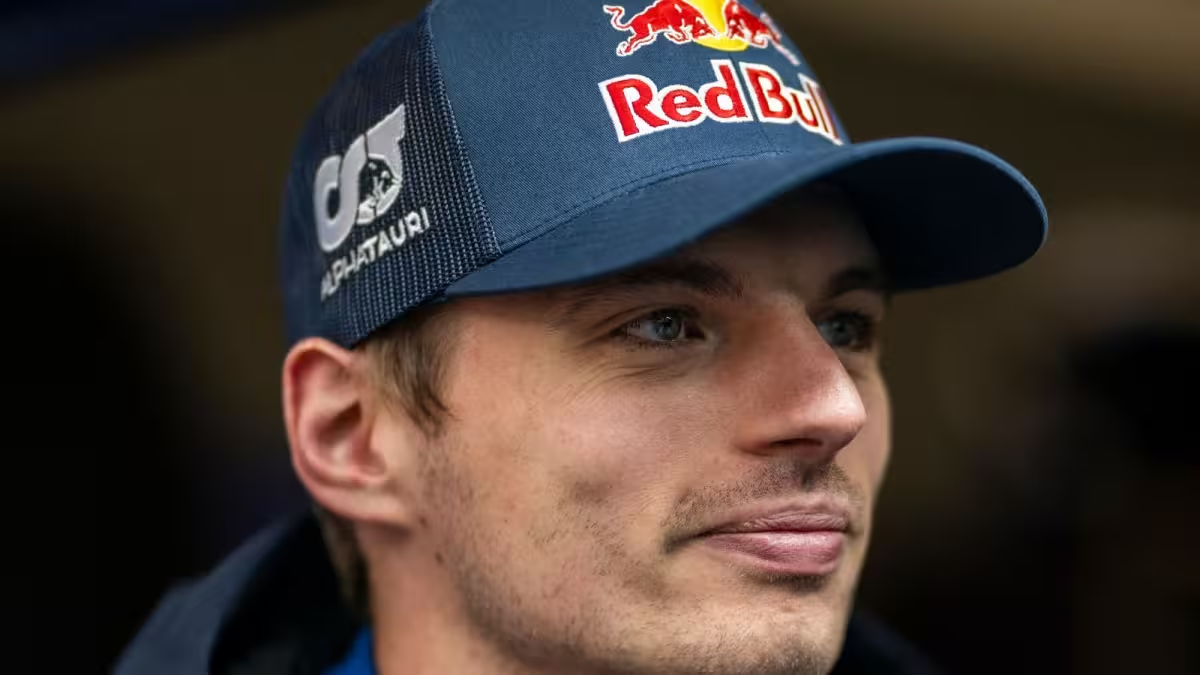
Max Verstappen was not in Monaco this weekend, but his name still hung over the Principality. While Formula E staged its flagship weekend there and Nyck De Vries won the opening race on Saturday for Mahindra, drivers and officials were still talking about the Dutchman’s February jibe that the new Formula 1 car was “C'est une Formule E sous stéroïdes.”
For Norman Nato, the line landed lightly. “Ça m'a fait rire,” he said, adding: “Je connais très bien Max, on se voit de temps en temps et c'est juste quelqu'un qui dit ce qu'il pense.” Jean-Éric Vergne was equally relaxed about it. “Je n'ai pas vu ça négativement,” he said, while also calling the attention it brought “C'est plutôt bien.”
The reaction matters because Monaco is not just another stop on the calendar. Formula E describes it as its flagship weekend, and this one came as the series tries to keep growing in its 12th season. Jeff Dodds, its chief executive, said the comment had done more than sting egos. “On sait très bien que Max n'essayait pas d'être méchant avec nous,” he said, adding that Verstappen knew the work done by Formula E drivers and the product itself. He said he did not think for a second that the remark was aimed against the championship.
Dodds’ argument was simple: the noise helped. He said more people watched Formula E videos on YouTube or searched for how to follow the championship after Verstappen’s comment. Vergne put it another way. “C'est plutôt bien,” he said, noting that the media started talking about Formula E after the remark. Nato called it “C'était un coup de projecteur,” and Dodds agreed in stronger terms: “Il a vraiment attiré l'attention sur la FE.”
That attention comes at a time when the series is still trying to carve out a larger place in motorsport. Dodds linked the conversation around Formula E to broader debate about electrification in Formula 1, saying increased talk about the electric side of grand prix racing also lifts interest in batteries and electric motors. He also argued that Formula 1 would make the landscape easier to read if it returned to a combustion engine, and said he believes that could happen in 2030 or 2031.
The contrast between the categories was part of the backdrop in Monaco. Nick Cassidy said Formula E allows drivers to push fully in qualifying because energy can be managed over the race, while Formula 1 presents an energy-management problem on a single lap with no margin for error. Sébastien Buemi, meanwhile, straddles several worlds at once: Formula E with Envision, the World Endurance Championship with Toyota and Formula 1 as a Red Bull test driver.
Verstappen’s words, delivered in February, were meant as a quick quip. In Monaco, they became something else: a marketing lift, a talking point and, for a series still in its 12th season, a reminder that even an offhand line from a rival can carry farther than a podium ceremony.
That was especially true this weekend, when Verstappen spent the same hours in GT3 at the 24 Hours of the Nürburgring in Germany and drew a record number of people there, while Monaco was left to sort through the afterglow of his comment and the win by De Vries.