

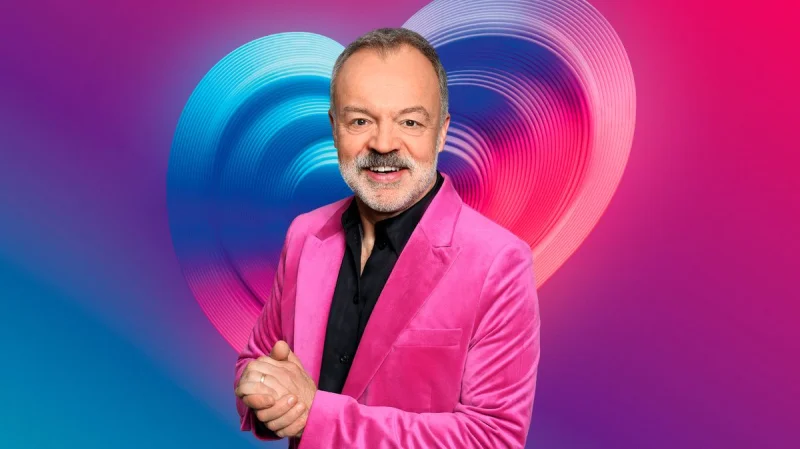
Graham Norton has recalled the night he was stabbed, robbed and left for dead on a London street in his mid-20s, saying the moment forced him to think he was dying and ask a stranger to hold his hand.
Speaking about the attack, Norton said he told a little old lady, "will you hold my hand," as he waited on the pavement and believed the worst was happening. He later said the experience gave him "a really good attitude to risk and to failure because if you think of the worst-case scenario, no failure compares to dying. I'm not recommending anyone do it but for me it was a very useful and powerful life lesson."
The story sits at the centre of a career that began far from television. Born in Dublin in 1963 as Graham William Walker, Norton first wanted to be an actor before discovering stand-up comedy in the early 1990s. By 1992, he was already testing how far he could push an audience, even convincing some Edinburgh Fringe Festival attendees that he was Mother Teresa during a performance.
His rise continued through the 1990s, when he appeared on Father Ted and The Jack Docherty Show. Channel 4 then gave him his own programme, and The Graham Norton Show began in 2007 before moving from BBC2 to BBC1 in 2009. His profile was already national by then, but his place in one of British television’s most visible jobs was secured a year earlier, when he took over the UK’s Eurovision Song Contest coverage from Sir Terry Wogan in 2008.
Norton is due to return on Saturday, May 16 as the ’s Eurovision Song Contest grand final commentator, live from Vienna, extending a role he has fronted for 19 years. The job has become one of the most durable parts of his career, running alongside a talk show that has made him one of the most familiar voices and faces on British television.
Yet Norton has never suggested that his private life has matched his professional one. In 2015, he told The Mirror that "work comes first," and said that finding love would be simpler if he were heterosexual. He added that, because he had worked so hard to get where he is, he continued to prioritise his job over other parts of his life, and admitted: "When I look back at my romantic history, I have to say it's taken second place to my job. Perhaps I don't expect my love affairs to last. Or it could just be that I have a low attention span."
The contrast is stark: a man once left on a street believing he might die, now returning to one of the most watched live broadcasts in Europe. For Norton, the near-fatal stabbing did not end the story. It shaped the way he has taken risks, handled failure and kept working.