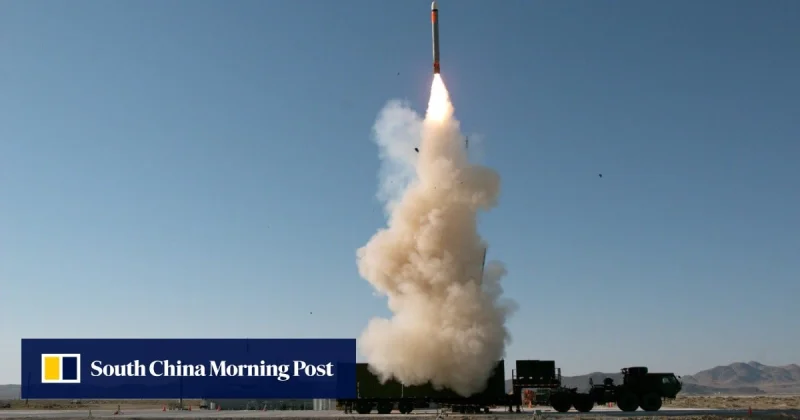
The United States launched a Tomahawk missile from its Philippines-based Typhon missile system last week, a move that sharpened an already tense standoff in the U.s. China South China Sea and put fresh pressure on the Philippines’ decision to keep the weapon on its soil.
Philippine ambassador to Washington Jose Manuel Romualdez said the missile launchers remain in the country and that U.S. and Filipino defense officials have discussed deploying upgraded types of American missile systems this year. He said the Typhon system, which the U.S. Army deployed to Luzon in April 2024, has stayed in place, along with an anti-missile launcher called the Navy Marine Expeditionary Ship Interdiction System that arrived in April last year.
The new launch comes days after the United States and the Philippines laid out specific defense and security plans for this year in a joint statement on Tuesday. The plans call for joint military exercises, U.S. support to help modernize the Philippine military and efforts to increase deployments of U.S. cutting-edge missile and unmanned systems to the Philippines. The allies also said they support freedom of navigation and overflight, unimpeded lawful commerce and other lawful uses of the sea for all nations.
That message was aimed squarely at Beijing. China has repeatedly voiced alarm over the Typhon deployment in the northern Philippines in 2024 and over the anti-ship missile launcher installed last year, saying the weapons are designed to contain China’s rise and threaten regional stability. Beijing has asked Manila to withdraw the launchers from its territory, but officials led by President Ferdinand Marcos Jr. have rejected the demand.
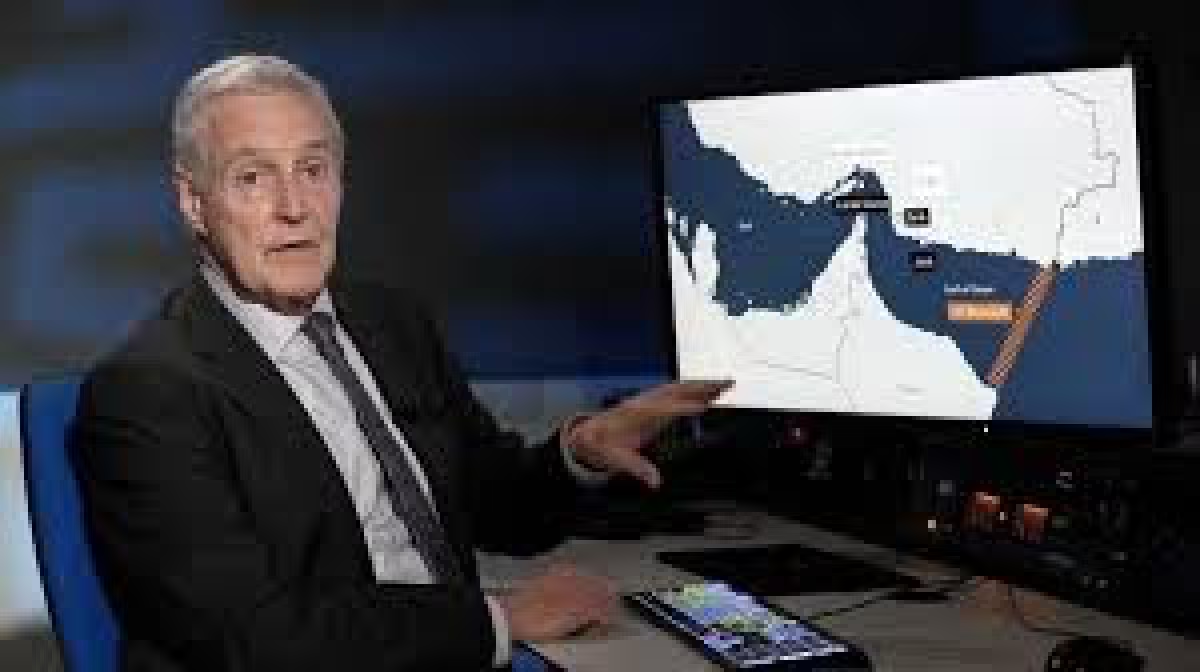
Romualdez said the deployments were not meant to provoke anyone. He said Filipino and U.S. forces have used joint drills to familiarize Philippine troops with the systems’ capabilities and that the discussion over more advanced launchers reflects a longer effort to build up the country’s own defenses. "It's a kind of system that's really very sophisticated and will be deployed here in the hope that, down the road, we will be able to get our own," he said. He also said the deployments "did not aim to antagonize any country".
The friction is playing out in waters where confrontations between Chinese and Philippine coast guard forces have spiked in recent years, turning the South China Sea into one of Asia’s most volatile flashpoints. Vietnam, Malaysia, Brunei and Taiwan are also involved in territorial standoffs there, making every new missile deployment and every joint patrol part of a wider contest over who controls the region’s sea lanes.
For Manila, the immediate question is whether it can keep deepening its security ties with Washington without giving Beijing a stronger pretext to escalate. For China, the answer remains the same: U.S. missile systems in the Philippines are a challenge it has not accepted, and one more launch only makes the argument harder to ignore.