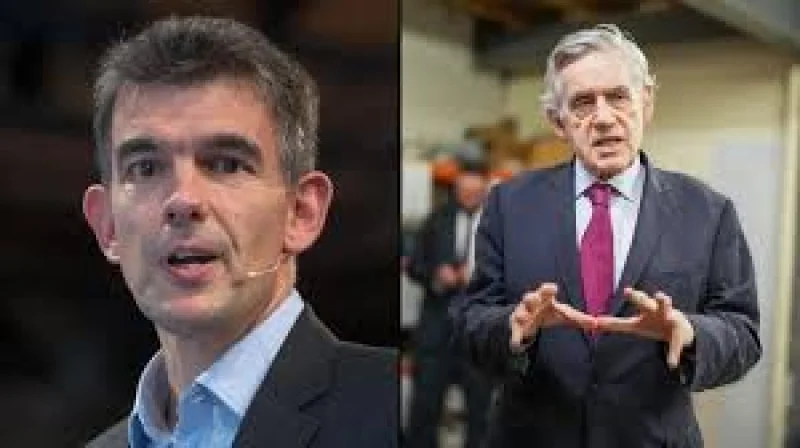
Matt Brittin began his first day as director general on Monday morning with a warning to staff that tough choices are unavoidable as the broadcaster tries to make savings. He told employees the has never been more needed, even as it prepares to confront one of the most difficult periods in its recent history.
Brittin, who replaced Tim Davie after last year's resignation, said the corporation was the most trusted news provider, the cornerstone of our creative economy and a force that brings people together. Speaking at New Broadcasting House in central London, he said he was honoured and humbled to take on the role and added: “We need, collectively, to call on that sense of urgency now.”
The scale of the job is stark. Brittin must decide how to make £500 million in cuts, and the expects to lose up to 2,000 jobs as it seeks to meet that target. He told staff, “That means moving with velocity and clarity,” and said, “I know change will not be easy.”
His arrival comes after a bruising stretch for the broadcaster. Davie stepped down last year after criticism that a Panorama documentary misled viewers by editing a speech by US President Donald Trump, and the has since been dragged into a multi-billion dollar Florida lawsuit filed by Trump. The corporation has urged a court to dismiss the case, arguing that the episode never aired in the US.
The pressure is not only legal. Brittin was greeted on his first day by protests from National Union of Journalists members, who are on strike over shift changes at World Service radio news programmes Newshour and Weekend and Radio 4's The World Tonight. Further cuts to services are expected in the coming months, adding to the sense that the broadcaster is trying to shrink while protecting its public mission.
Brittin arrives after years at Google, where he worked from 2007 until 2025 and served as head of its Europe, Middle East and Africa regions. His salary will be £565,000, and he now has to steer the corporation through financial strain, union unrest and a charter renewal fight with the government ahead of the 's 2027 deadline. In March, the also floated the idea of cutting the cost of the TV licence if more people paid the annual charge.
Dame Caroline Dinenage said Brittin “will have a significant job on his hands” in a period of turbulence for the broadcaster. That looks conservative. Between the cuts, the court fight and the disputes over what kind of should survive, Brittin's first task is not to imagine a fresh era. It is to hold the institution together while deciding what it can no longer afford to be.