


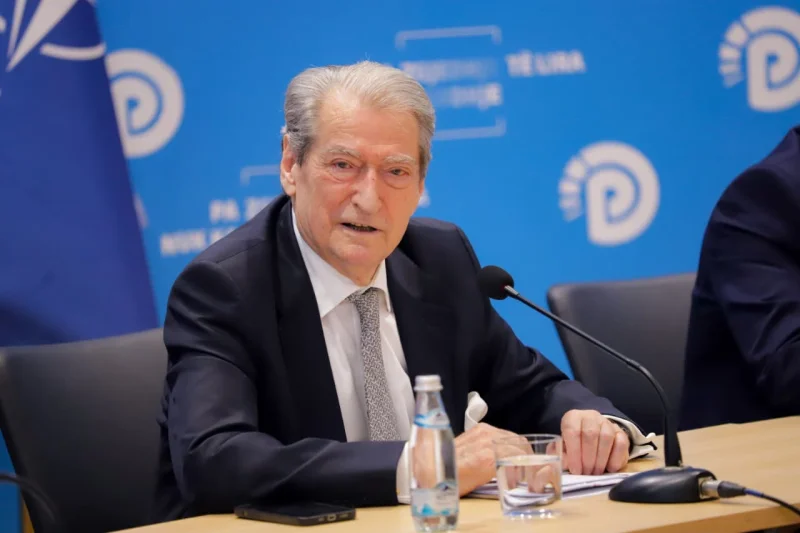
Sali Berisha accused Prime Minister Edi Rama on Tuesday of hiding what he called the European Parliament’s latest and most severe report on Albania, saying the document lays out unusually harsh criticism of the country’s electoral process and the way state institutions function. Speaking to the media, Berisha said the report was the European Parliament’s Foreign Affairs Committee report and described it as “the most critical report ever adopted in the history of the integration process.”
Berisha said the report began as a two-page draft and ended up with roughly 300 amendments, a scale he presented as evidence of how much scrutiny it drew before adoption. He said the document contains the kind of language that tells the government it did not make fair choices, but instead acted like a party state, bought votes and failed to meet democratic standards. He added that the report repeatedly focuses on strategic investments, public-private partnerships and the need for transparency around both.
The former prime minister said the report also calls for the publication of the relevant lists for strategic investments and PPPs, and for the Albanian parliament to play a central role in the European integration process. He said it also demands prompt implementation of two Constitutional Court decisions, insisting that the court’s rulings must be carried out without delay. Berisha linked those points to broader concerns about governance, saying the report’s criticism touches the electoral process, institutional performance and the handling of sensitive state projects.
Albania has spent years under close European review as it works through the requirements of accession talks, and reports from Brussels are watched closely by both the government and the opposition. Berisha said the latest document echoes criticism already seen in the IBAR report on the justice system and Albania’s EU integration path, placing the new text in a wider pattern of concern about reforms that remain incomplete.
The tension in Berisha’s remarks was not only about what the report says, but about who gets to frame it. He accused Rama of keeping it from the public, saying, “Our only concern is how to hide the report from the controlled media.” That leaves the political fight over the report itself nearly as important as its findings: in a country where EU-facing documents can shape the debate at home, the real test now is whether the government answers the criticism point by point or tries to outlast it.