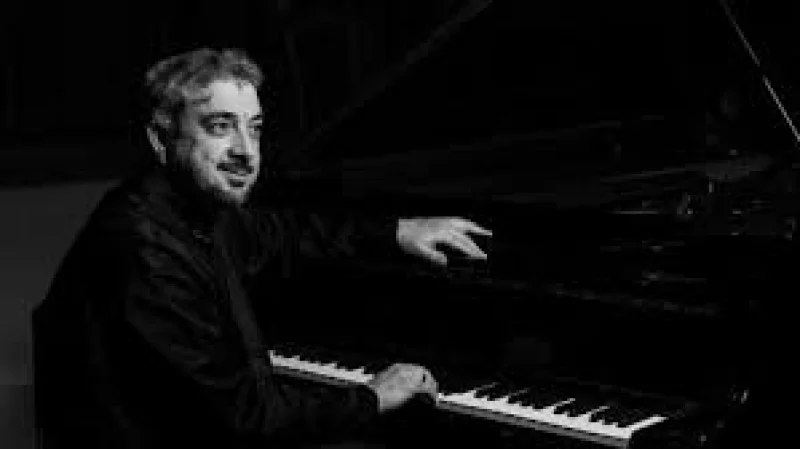
Konstantin Lifschitz, the acclaimed pianist and teacher who shaped generations at Hochschule Luzern, has died after a longer serious illness at the age of 49. His management confirmed his death on 27 November to BR Klassik, ending the career of a musician who had remained active at the school until shortly before he died.
The news is being shared now because it reaches far beyond one conservatory. Pianist Luca Ciammarughi wrote on Facebook that Lifschitz had died at 49, while Hochschule Luzern said it had lost an outstanding pedagogue, musician and colleague whose work over more than 18 years had left a lasting mark on its musical life. For students, that means the teacher who built a teaching studio there is gone just as his influence was still being felt in the practice rooms.

Lifschitz had a career that did not follow the usual piano route. After studying at the Gnessin-Institut in Moskau, he chose not to enter piano competitions, yet he still built an international reputation. He was born in Charkiw in Ukraine, later settled in Luzern in Switzerland, and became known for his Bach and Beethoven cycles as well as for the way he approached selected piano works by Brahms and Rachmaninow.
Recognition followed in Germany and beyond. He received the Echo-Klassik-Preis in 1995 in the category Europäischer Nachwuchskünstler des Jahres and a Grammy-Award in 1996. BR Klassik also featured him in Das starke Stück – Musiker erklären Meisterwerke, where his interpretations underlined why his name carried weight well outside academic circles.
What remains unspoken in the public confirmation is the illness itself and how long the final decline lasted in detail. What is clear is that Hochschule Luzern has lost a long-serving figure whose work connected Ukraine, Russia, Germany and Switzerland, and whose absence will now be felt both in performance and in teaching.