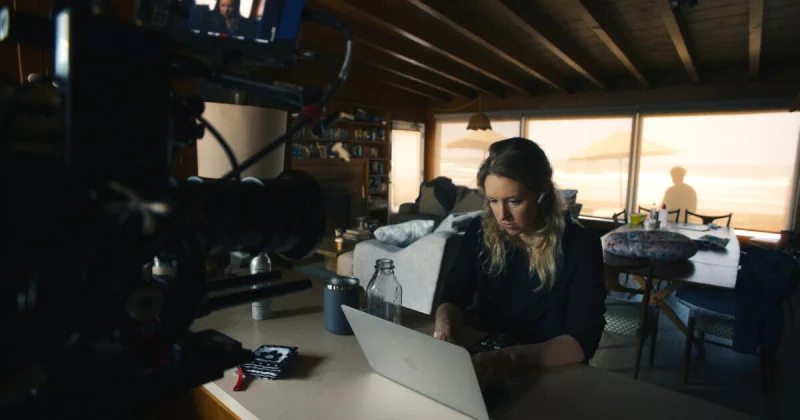
Elizabeth Holmes is back on screen in You Can See Everything, and the new digital release does not pin her down. At the opening, she is 34 days from starting her prison sentence, yet even with Nathan Fielder filming her from inches away, the result is a portrait that stays slippery.
That is why the film is drawing attention now. Holmes is not a fresh figure in the Theranos story; she is the disgraced founder of a blood testing startup that courts, whistleblowers, bystanders, podcasts, TV dramas and investigative journalism have already judged in public. What matters here is whether a new camera angle can explain what all that did not: whether she was lying, naive, or something more complicated.
Fielder gives her the kind of close-up that should expose something. The reviewer says you could count her eyelashes. Over three hours of blood, sweat and tears, the film finds Holmes answering direct questions with procedural deflection. Her old fantasy was simple enough to state and hard enough to believe: one drop of blood in a tiny box could reveal everything. That promise was the core of Theranos, and it was also the claim that made the case against her so explosive.

But the film never turns that promise into a clean psychological answer. The courts have already settled the fraud case, and the outside reporting around it has filled in the record, yet the documentary still leaves room for the more troubling question of character. Was Holmes deceiving other people, deceiving herself, or both? The film does not resolve that, and it does not even try very hard to choose.
That gap is why the release feels oddly revealing. Billy Evans, Holmes’s partner, remains in the frame only as part of the life around her, while Holmes keeps steering away from anything that would sound like a confession. The same weekend, Jon Ronson was reading his new book The Castle again, a reminder that fascination with this kind of figure often survives long after the facts have stopped changing. Zoe Williams captured the awkwardness of it with a line that lands like a shrug: “Well … She seems nice?”
So the film’s sharpest conclusion is also its most frustrating one. You Can See Everything shows Holmes up close, but not up front. It gives viewers a woman who can still make a room curious and a case that is already decided, then leaves the space between those two facts untouched.