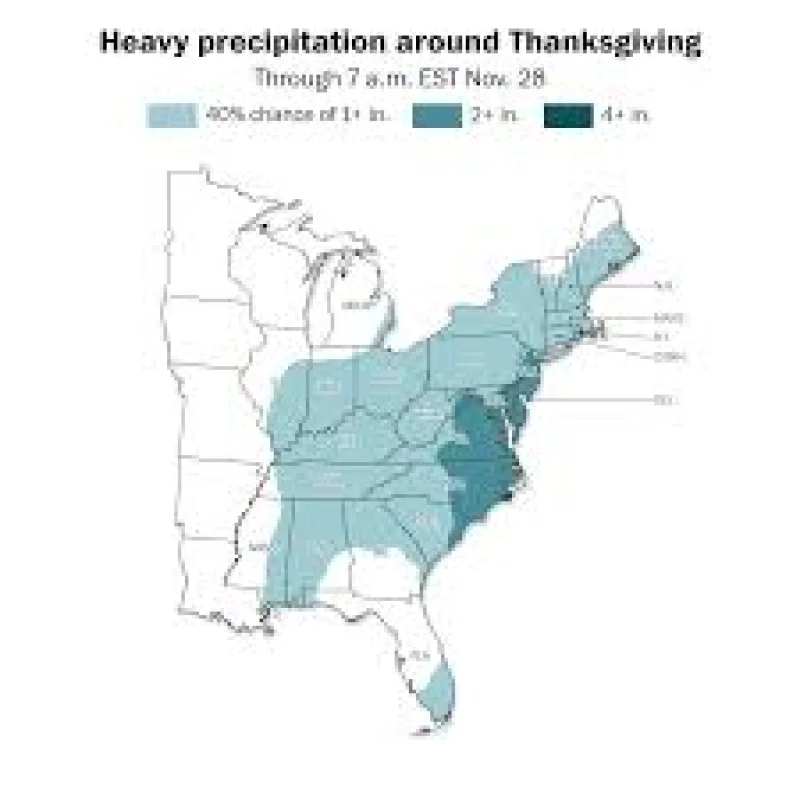
Forecasters are warning that Thanksgiving travel could be hit by storms on both coasts, with a potentially strong nor'easter set for Thanksgiving Day and a West Coast storm pattern already building. The latest Thanksgiving weather forecast points to the kind of timing that can turn a busy holiday travel window into a slow one.
That matters because AAA projects 81.5 million Americans will travel at least 50 miles from home between Tuesday, Nov. 24, and Monday, Nov. 30, including 72.9 million by car and 5.96 million on domestic flights. The Weather Channel said each of the storms has the potential to trigger major weather delays at major Northeast and West Coast hubs, and the risk is highest as travelers pile into airports and onto roads later this week.
On the East Coast, a coastal storm brought heavy rain and gusty winds from the mid-Atlantic to New England starting Sunday night and continuing into Monday morning. In New York City, heavy rain started Sunday and persisted into Monday. The National Weather Service in New York said early Monday that 1 to 2 inches of rain were expected, with more in places, along with wind gusts of 35 to 45 mph and possibly near 50 mph on the coast. It also warned that flooding along the shore could be widespread, with major flooding possible in the most vulnerable spots on Long Island's south shore.
Forecasters are growing more confident that another storm will hit the Northeast on Thanksgiving, and they expect it could bring heavy rain, strong winds and flooding along the coast. The National Hurricane Center said Saturday that the storm was unlikely to become a tropical or subtropical storm, but that did not lessen the concern. New York City Emergency Management said gusty winds Monday could slow flights, and the bigger concern is whether the later storm lines up with peak holiday movement just as people are trying to get where they are going.

On the West Coast, the National Weather Service issued a coastal flood warning for the San Francisco and San Pablo Bay shorelines from Monday through Thursday afternoon as the year's highest king tides coincide with an incoming storm. An atmospheric river is affecting the West Coast, and rain is expected to reach the Northwest Monday night before a strong Pacific storm hits from Northern California to Washington state starting Tuesday. The greatest impacts are expected Tuesday and Wednesday, with a second storm possible Wednesday and the heaviest rain spreading to most of the West Coast on Thursday.
That setup raises the odds of trouble on the region's busiest corridors. Heavy rain, strong winds and mountain snow could cause significant delays along I-5 between Seattle and San Francisco and on mountain routes including I-80, while airports in Seattle and San Francisco could also see delays. Haley Taylor said drivers along I-5 should prepare for heavy rain that can reduce visibility and leave water collecting on the roadway, and warned that travelers heading into the Sierra will face heavy snow that could make mountain routes difficult or impassable. The National Weather Service office in Reno said the storms will bring fresh snow to the Sierra Nevada and periods of difficult travel.
The concern is not just what the storms can do, but how they overlap with the holiday calendar. Delta Air Lines resolved an outage that caused delays nationwide on Sunday, and the wider system is already stretched before the main rush begins. If the East Coast storm strengthens into Thanksgiving Day and the West Coast pattern keeps feeding rain and snow into the same travel window, the delays that matter most may be the ones that arrive when people have the least room to absorb them.
Florida is still dealing with the tail end of earlier flooding, with more than 16 inches of rain falling near Cocoa Beach over three days and the St. Johns River near Cocoa reaching 18.6 feet on Friday, breaking a record set in 1953. Flooding along the river is expected to linger past Thanksgiving, another reminder that the holiday travel forecast is not limited to a single storm or a single coast. By Thursday, the question is not whether weather will interfere with Thanksgiving plans. It is how much of the country will have to work around it at once.