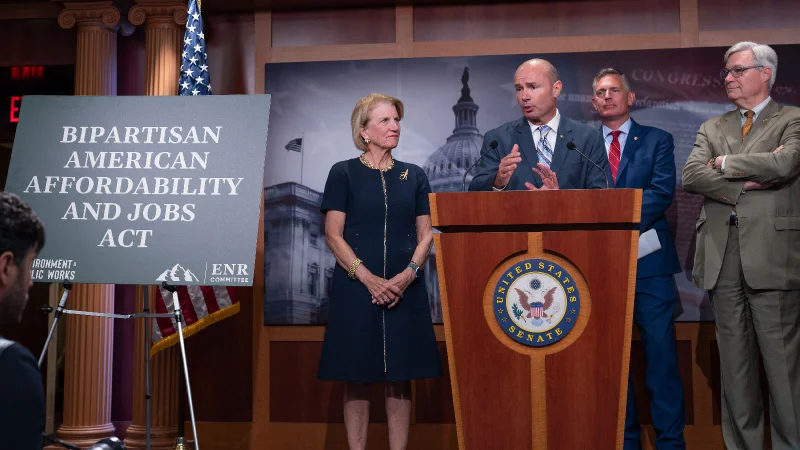
The U.S. Senate is considering a nearly-500 page bipartisan permitting reform bill, and the fight over it has already split the people most likely to shape its fate. Clean energy companies, oil and gas interests, electric utilities and Tribal organizations are all pressing senators in opposite directions as the measure moves forward.
The reason the bill is drawing so much attention now is simple: supporters say it could speed the buildout of new energy generation, transmission lines and other infrastructure at a time when more of the economy runs on electricity. They argue that faster permitting would cut emissions, control household costs and clear the way for projects that have been stuck for years.
That is why the list of backers is so broad. Through the Solar Energy Industries Association, 300 solar and energy storage companies endorsed the measure. The American Petroleum Institute and leaders across the oil and natural gas industry also backed it, as did the Edison Electric Institute on behalf of all U.S. investor-owned electric companies. Sen. Sheldon Whitehouse, Zeke Hausfather and David Roberts were also supportive, with Roberts saying on Bluesky that there is no better deal on permitting in the next Congress.

Maryann Mannen, speaking for the oil and gas side of the debate, said the legislation would help unleash energy infrastructure development and reduce legal barriers for project development, including oil and gas pipeline expansion. Her view matches the broader argument from supporters that the bill would make it easier to build the infrastructure that modern electricity demand now requires.
But that same promise is also what has angered opponents. Eleven Tribal organizations came out against the bill, including the Native American Rights Fund, the National Indian Child Welfare Association and the National Congress of American Indians. They say the revised legislation responds to Tribal concerns but still undermines Tribal sovereignty, and that changes to Section 106 of the National Historic Preservation Act in Title III continue to weaken longstanding federal protections.
The friction is not just about pace. Opponents say the bill still fails to ensure meaningful government-to-government Tribal consultation, even as supporters portray it as a practical compromise that could help get projects built faster. That is the central split in the Senate debate: one side sees a rare path to more energy development, while the other sees a measure that trims away safeguards in the name of speed.
What happens next is up to the Senate, and the final text may matter as much as the vote itself. For now, the bill has exposed a divide that cuts across climate policy, infrastructure and Tribal rights, with no sign that either side is ready to give ground easily.