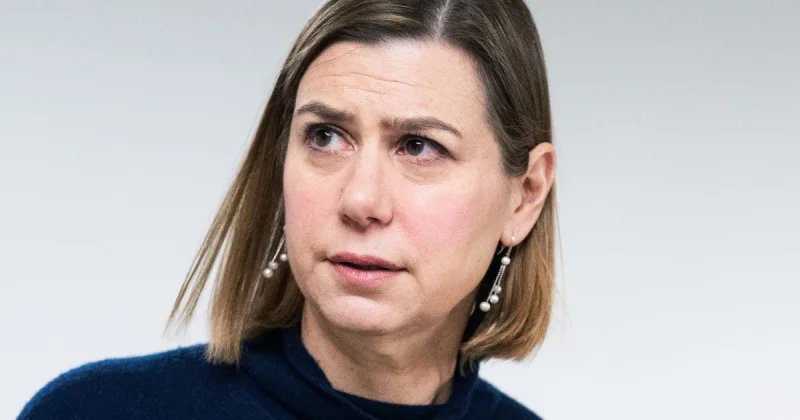
Sen. Elissa Slotkin fired back on Wednesday at Aaron Reitz, the Justice Department official who posted a letter suggesting her political remarks could cross into criminal territory. In her reply, obtained by NBC News, Slotkin said the inquiry was baseless and told Reitz to withdraw the letter immediately.
The move puts the DOJ probe of Elissa Slotkin rhetoric in sharper focus because it is not just about one lawmaker’s words. Reitz posted similar letters on X to five Democratic members of Congress, raising the same kind of question across the party’s congressional ranks and turning a speech dispute into a broader fight over how far federal prosecutors can go when lawmakers criticize conduct inside government.
Slotkin’s letter drew a hard line between political speech and criminal conduct. She said she made her statements consistent with her basic right to freedom of speech under the First Amendment to the U.S. Constitution and argued that oversight is an important constitutional responsibility for a United States senator. She also said the Constitution’s Speech or Debate clause bars prosecution of a legislator for conducting an investigation or performing other legislative acts.

That is where Reitz’s warning runs into the sharpest resistance. Slotkin said his public threats violated Justice Department policy and that his choice to post the letter online, rather than send it to her, her attorney or Senate legal counsel, made it look more like a bid for publicity and political ambitions than a legitimate inquiry. She ended by saying his threat of investigation was frivolous and should be withdrawn at once.
Reitz, who now serves as U.S. attorney for the Southern District of Texas, previously worked as chief of staff for Ted Cruz and became the district’s top prosecutor over the summer after placing fourth in the Republican primary for Texas attorney general. He told News he was not interested in chilling free speech. But the wording he is leaning on suggests something narrower than a broad speech dispute: he is treating comments made in an oversight setting as potentially criminal if they are read as something other than protected legislative activity.
The fight lands after a separate clash earlier this year, when Slotkin and five other sitting Democratic lawmakers were targeted by the Trump administration over a video meant to remind members of the military and intelligence communities that they should not obey unlawful orders. Allies of the U.S. attorney for the District of Columbia tried to indict the six Democrats for that speech, and federal grand jurors unanimously rejected the attempt. Last week, Attorney General Todd Blanche also said Slotkin’s words alone were absolutely not a crime and that there were no ongoing criminal investigations into words that incoming senators or congressmen have said.
For now, the key unanswered question is whether Reitz or the Justice Department will follow Slotkin’s demand and pull back, or whether the public letters are meant to keep the pressure on. Her response makes clear she is not treating the inquiry as a legal warning so much as a political test of how much room lawmakers still have to speak and conduct oversight without inviting a prosecutor’s letter in return.