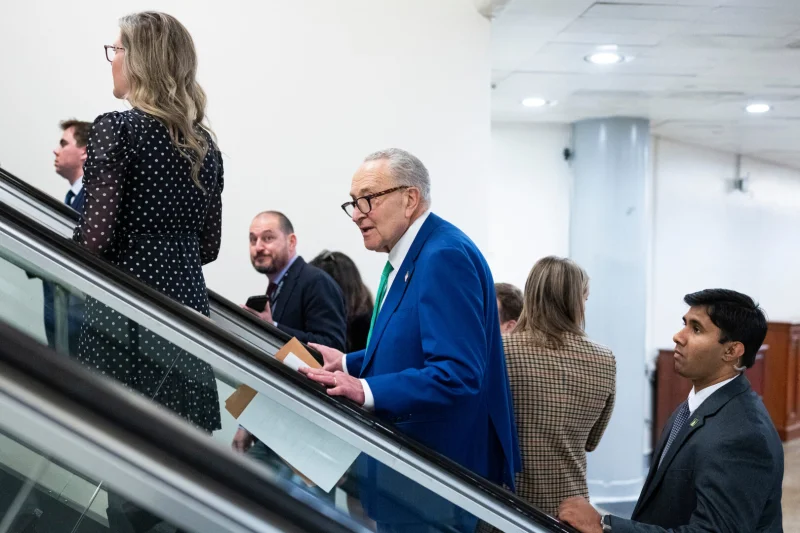
Senate Democrats moved Tuesday to keep their vote for a new Senate Majority Leader on Dec. 1, turning back talk of an earlier decision as the caucus heads toward a leadership fight with the incoming majority. The schedule stays in place even as the party prepares to enter the 120th Congress with as many as 56 seats.
The timing matters because the leadership contest is not just about one job. It is also about who gets a say before a new majority takes shape, and the larger freshman class will have a vote while retiring senators will not. That is why the prospect of speeding up the election had been floating around the caucus: some senators wanted to avoid internal divisions from damaging the party before it even took power.

At the center of the contest is Charles E. Schumer, who said he was confident he would be the next leader and that he had the votes. Chris Van Hollen, meanwhile, said his bid had momentum and warned that efforts to cut the process short would fail. Supporters of Van Hollen have increasingly cast any shorter contest as an attempt to stop that momentum rather than as a simple procedural change.
The meeting itself did not settle the dispute. Several senators said the leadership discussion did not come up at all, and neither Schumer nor Van Hollen made a presentation on their bids. The absence of incoming senators was a major reason, since they will all vote in the leadership election and could not easily be brought in on short notice. Tim Kaine said no one had raised an accelerated vote with him, adding that the leadership discussion did not come up because the newcomers were not there; he noted that only Scott Colom was present for Tuesday’s lunch amid his belated orientation.
Other senators signaled they wanted the new class heard before anything is decided. Martin Heinrich said Monday evening that he wanted to hear from the freshman class as well. Mazie K. Hirono said she did not know about moving up the elections, then said the caucus needed enough time for a robust discussion and should be very embracing of the new people who had been through fire to get there. She said they had a lot of talent to bring to the table. With the Dec. 1 vote still standing, the next step is clear: the caucus will have to settle the question with the incoming senators in the room, not around them.