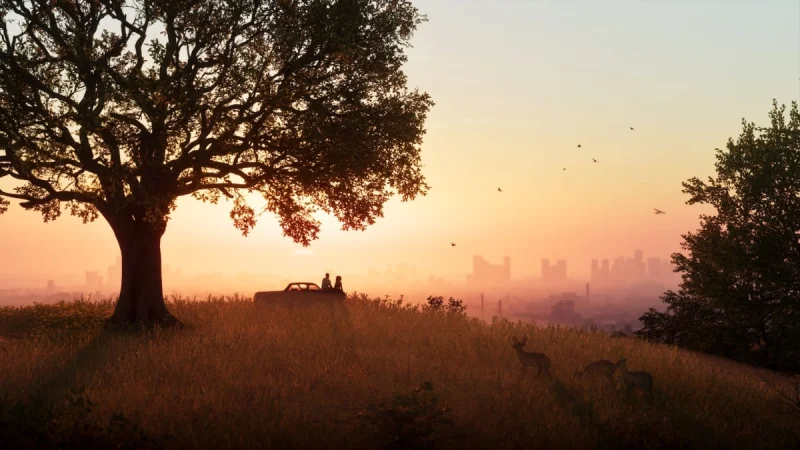
The Weather Channel has shared six new GTA 6 screenshots that put Leonida’s weather front and center, with heavy rain, storm clouds, lightning and thick fog rolling across the fictional state. Rockstar Games is leaning on the real-world forecast brand to push the game’s dynamic weather system, and the images give the clearest public look yet at how that world is meant to feel in motion.
That matters now because GTA 6 is still one of the most watched games in development, and every fresh look at it gets picked apart fast. The screenshots were presented as part of Rockstar’s promotion, but they also arrive with a clear message: weather is not decoration here. It is being sold as a core part of the experience, and the studio wants players to read Leonida as a place with its own climate and mood, not just a map with effects layered on top.

Owen Shepherd said Rockstar had to completely reimagine the in-game weather systems to make them feel more localized, persistent and dynamic, and he tied that work to the broader aim of making the Grand Theft Auto series feel deeper and more immersive than before. He said the weather can shift from clear blue skies to towering cumulonimbus clouds, a detail that fits the screenshots now circulating. In that sense, the visual pitch is straightforward: the game is trying to make weather feel like part of the geography of Leonida itself.
The friction is that this kind of ambition sits beside a very different piece of reporting about the game’s technical target. GTA 6 is still said to be aiming for 30 FPS on PS5, Xbox Series X and PS5 Pro. That does not make the weather less impressive, but it does explain the trade-off the game is living with: a world built to feel alive, while staying within a frame-rate target that suggests the simulation and presentation are being carefully balanced rather than pushed without limits.
For now, the screenshots do their job. They show Rockstar using a weather brand to frame Leonida as a place where storms build, mist hangs low and visibility can change quickly. What they do not show is the full extent of how often those conditions will change in play, or how far the system will go once players are actually inside it. That is the part readers will keep watching for, because the next reveal has to prove the weather is more than a marketing flourish.