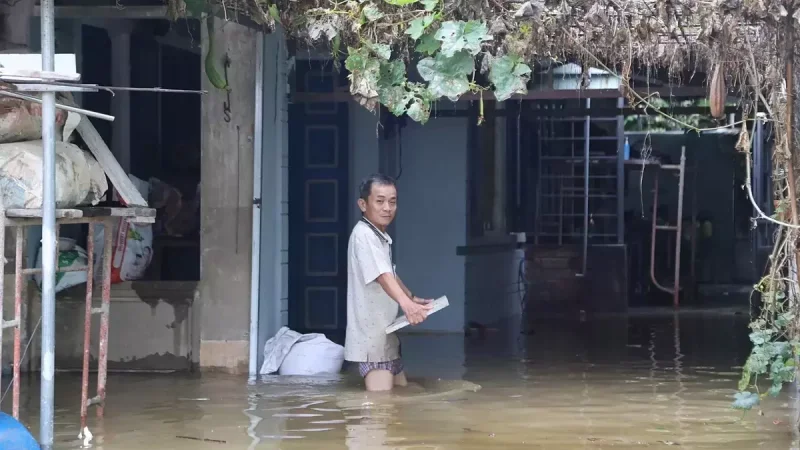
Heavy rain in central Vietnam is expected to last until the morning of 12/11, with some places seeing more than 200 mm as the wet spell keeps expanding across the region. In the same period, the north remains cold before temperatures begin to edge up from 13/11.
Nguyễn Văn Hưởng said this is a cold spell that is rarely seen in November and has been uncommon over the past 10 years. He said northern temperatures have fallen by 8-10 degrees Celsius on average, and by 10-12 degrees in some places, which is why the cold is still being felt even as the rain pattern is already shifting.
From the evening of 11/11 to the morning of 12/11, TP Huế, TP Đà Nẵng and the eastern part of Quảng Ngãi are forecast to receive 50-120 mm of rain, with some locations topping 200 mm. Farther south, eastern Gia Lai, Đăk Lăk and Khánh Hòa are expected to get 30-70 mm, and isolated places there may exceed 120 mm. The rainfall is concentrated in the same corridor that has already seen rising water on several rivers, and it comes after heavy rain from TP Huế to Khánh Hòa on 11/11 pushed flood levels higher.

The rain is not ending abruptly. It is set to ease from the afternoon of 12/11, then shrink in both coverage and intensity on 13/11 and 14/11, before being limited to scattered showers in a few places from 15/11. That slower retreat matters because the north is not warming right away either: rain there will spread across the region on 12/11 and continue into 13/11, while the cool air lingers until after 12/11 and only trends warmer from 13/11.
The wider pattern is a strong cold wave that moved in on the night of 8/11, moved quickly and kept being reinforced. It is the third cold spell of the season, after earlier waves on 10/9 and the night of 4/10, but this one is stronger, faster and more unusual for November. Bạch Long Vĩ has recorded northeastern winds at level 8, with gusts of level 9-10, while Bạch Mã has seen more than 800 mm of rain in less than 24 hours and some places in Thanh Hóa have had over 400 mm in one night.
That is the part that now carries the most weight for readers: the rain in central Vietnam is still running through the night and into the morning of 12/11, but the system is already weakening after that. What happens next is less about whether it stops and more about where the water has already gone, because several rivers have reached their peaks and some places have already flooded. Any further disruption will depend on how quickly the rain breaks and how much runoff is still feeding the rivers after sunrise.