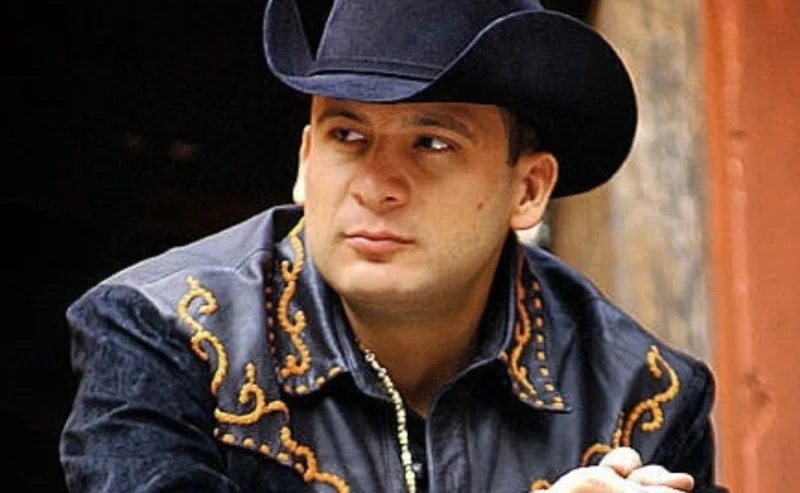
The family of Valentín Elizalde has publicly distanced itself from recent audiovisual productions about the singer’s life and history, saying it did not take part in making them and would not comment on content it had not reviewed.
The statement comes nearly 20 years after Elizalde was killed in Reynosa, Tamaulipas, and lands at a moment when interest in his story has returned. That renewed attention has put his legacy back in public view, but his relatives chose to mark the moment by drawing a clear line around what they did not help create.
In the family’s view, Elizalde was not only a figure defined by the circumstances of his death. They described him as a son, a father, a brother and an artist who left an enduring mark on Mexican music, and said the best tribute is not to dwell on how he died but to celebrate what he achieved. That idea is also behind “La Dinastía Elizalde Continúa,” the family project through which Jesús “El Flaco” Elizalde, Joel Elizalde, Francisco “El Gallo” Elizalde and Valentina Elizalde say they have joined their voices to keep his music alive.

The friction is plain. The family is making clear that it had no role in the recent productions and has not judged them, yet it also acknowledges that public interest in Elizalde’s story has grown again. That leaves the most important question not about the series themselves, but about how his name is being used while his relatives work to keep the focus on the music rather than the violence that ended his life.
Elizalde was 27 when he was killed in the early hours of 25 November 2006 in Reynosa, Tamaulipas, after a performance at the palenque of Expoferia. He left the venue in a black pickup with Mario Mendoza Grajeda and Reinaldo Ballesteros, and armed men blocked the way and opened fire when the vehicle had advanced about 100 meters. The truck was left with dozens of bullet holes, and Elizalde, Mendoza Grajeda and Ballesteros died at the scene, while Fausto “Tano” Elizalde survived the attack.
Camila Valencia signed the family’s statement, which closes with a simple point: the tragedy is part of the story, but the songs are what make it last. For now, that is the family’s answer to any production built around El Gallo de Oro.