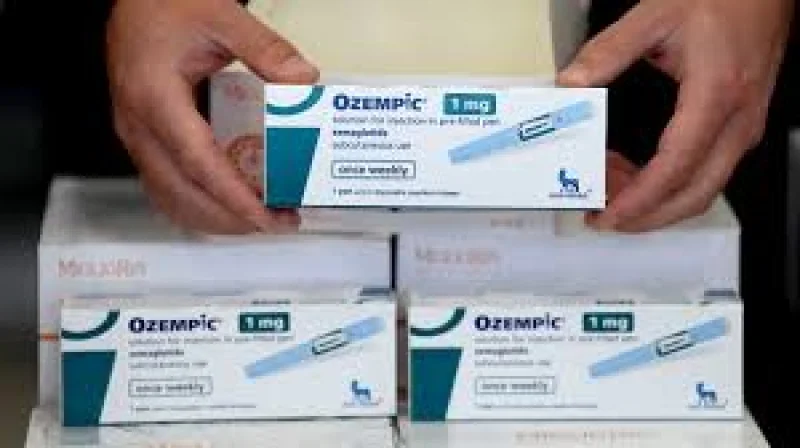
The FDA said on Monday that all GLP-1 medications must add warning-label information about a rare eye condition linked to sudden, and sometimes permanent, vision loss. The requirement covers Novo Nordisk's Ozempic and Wegovy, Eli Lilly's Mounjaro and Zepbound, and Sanofi's Soliqua.
That makes the update immediate news for patients who take these drugs for type 2 diabetes, and for people using some of them to help treat obesity. The agency said it reached the decision after reviewing 126 clinical trials involving more than 134,200 patients and identifying 15 probable NAION cases, including 10 among GLP-1 patients.
NAION is a rare condition in which blood flow to the optic nerve is suddenly reduced. It can cause acute, painless vision loss in one eye, and the FDA said there is no treatment now that can reverse that damage. The agency said it began looking more closely at the issue after a 2024 study in JAMA Ophthalmology found an increased risk of NAION among people using GLP-1 medications.

The numbers the FDA cited suggest the risk is uncommon, but they also show why the label change was made. The agency found a NAION incidence rate of 6.4 cases per 100,000 person-years among GLP-1 patients, compared with 3.8 cases per 100,000 person-years among people on placebo or alternative glucose-lowering medications. It also said there were five probable NAION cases in patients receiving placebo and no probable cases in patients taking glucose-lowering medications that were not GLP-1.
Still, the companies are not conceding that the drugs cause the condition. Novo Nordisk said the data do not establish a cause-and-effect relationship and said it remains confident in the benefit-risk profile of its GLP-1 medicines. Eli Lilly had previously said it is aware of publications on the risk of NAION among GLP-1 patients. The FDA, meanwhile, said NAION cases have been reported for all currently marketed GLP-1 RA products.
The practical effect is that doctors and patients will now see the warning on labels rather than a tighter restriction on access. That is a lighter touch than pulling the drugs back or limiting who can use them, but it still puts a federal spotlight on a rare complication that can leave lasting damage. For patients already taking these medicines, the unanswered question is not whether the event is common; it is how much risk attaches to a specific drug and a specific person, and the FDA has not given a date for when the labeling update must be in place.