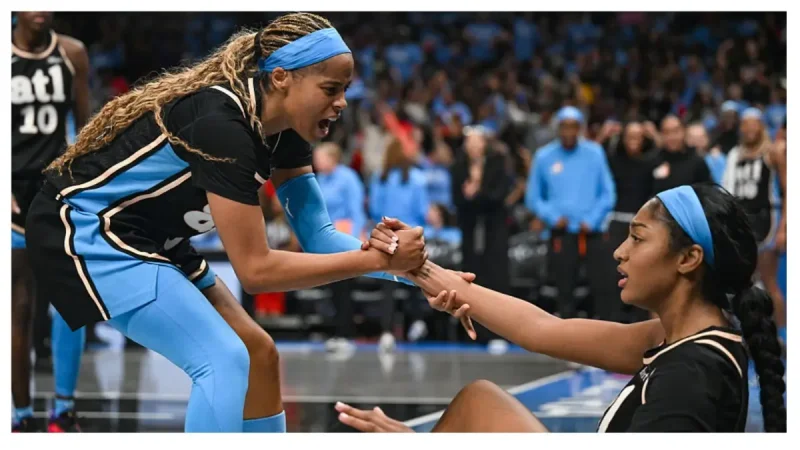
Jordin Canada said Oct. 16 that she pulled back from social media during the WNBA playoffs because it helped her stay focused and reconnect with the things that bring her joy. That choice sits in the middle of a louder argument around Angel Reese and Caitlin Clark, where online hate has kept spilling onto other WNBA players.
The attention has not stayed on Canada alone. Atlanta Dream teammate Rhyne Howard has also been described as taking abuse online, with the harassment tied by some to supposed Angel Reese fans, even as the broader conversation keeps circling back to Clark and what she is expected to say about it.
That is why the search keeps returning to Clark. For three seasons, people have kept demanding that she condemn racism, misogyny and homophobia, even though she has already done so more than once. On July 3, she delivered a lengthy statement against online hate and said it covered opponents, teammates and coaches. At her Oct. 8 season-ending news conference, she was asked again about Kelsey Mitchell’s comments on the treatment she receives and about the attention the team draws because of her.

Clark has been clear about where she stands. She said, “The harassment, the hate, none of that is okay. … There should never be question of character. Like I’ve always stood up here and said that and that’s truly what I believe. That’s how I was raised. … none of that is okay. And I don’t want anybody to ever experience that.” She also said, “As far as people that have used me to demonstrate racist rhetoric or hate or discrimination, that’s not something I stand for.”
The friction is obvious. The same voices that keep pressing Clark to answer for online abuse aimed at other players are also treating her as if silence were the problem, even after she has spoken. Canada’s decision to step away from the noise was a practical response to a familiar problem: when social media turns toxic, the cleanest move can be to stop reading it.
What remains unresolved is not whether the hate exists, but why the burden keeps landing unevenly. Canada found a way to protect her focus during the playoffs. The harder question now is whether the league’s conversation will keep asking Clark to account for messages she did not send, while the players actually receiving them are left to manage the fallout alone.