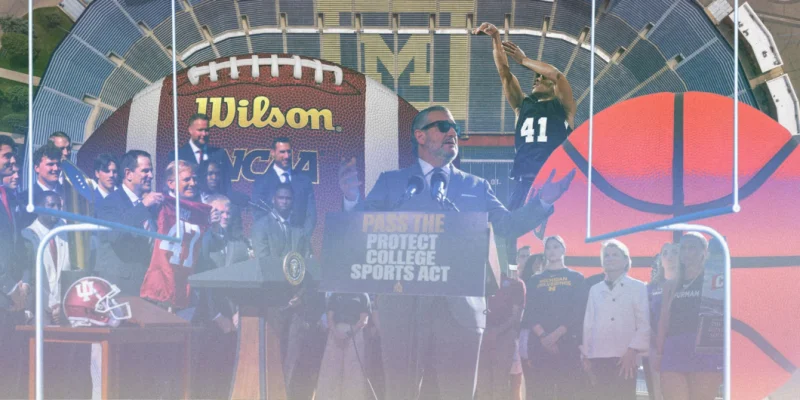
Neal McCluskey says college sports need freedom, not federal control. That argument lands now because college athletics have gone through jarring changes in recent years, and the question of who should steer them is no longer abstract. Mississippi senators are being asked, in effect, whether the next chapter should come from Washington or from the millions of decisions that already shape the game.
McCluskey’s case is blunt: the system works best when it is left to universities, athletes and the forces around them rather than overseen from above. He writes that college sports should not be governed by federal control, and he frames the dispute as one with real consequences for how the games are organized, valued and watched. For readers searching for why this debate matters today, the answer is simple: the ground has shifted under college athletics, and the fight over authority has become part of the sport itself.
He reaches back to the first half of the nineteenth century, when students at Harvard and Yale had little control over their time and still found ways to arrange occasional contests, including football games, while rowing was a popular pastime. In that world, the campus was not built around athletics. Sports sat on the edge of student life rather than at its center, and the system had room to grow without anyone designing it from Washington.

The turning point came in 1852, when the son of a director of the Boston, Concord, and Montreal Railroad struck up a conversation with a railroad agent while traveling home. That conversation led to the idea of sponsoring a regatta between Harvard and Yale, and the race proved a success that gave the railway publicity. McCluskey uses that history to show how college sports developed through private initiative, imitation and appetite, not through a single governing hand. The regatta did not stay isolated; it inspired more regattas with more schools and later spread into other sports as major changes in higher education pushed athletics from sidelight to front porch.
That history matters because it sits beside the reality McCluskey does not deny: government is already deeply involved in college athletics through state universities and antitrust law. He still argues for less federal control, even as the system depends on public institutions and legal rules that shape the market. He also points to the US Department of Education's Equity in Athletics Data Analysis website, which includes financial information for coeducational institutions with athletics departments and students receiving federal aid, as proof that the federal footprint is already there in ways many fans never see.
There is no clean answer to many disputes in college athletics, and that is part of McCluskey’s point. The issue is not whether money, law and education policy touch the game; they already do. The sharper question is whether another layer of federal control would improve a system that has always been built through millions of decisions by schools, athletes and fans, or whether it would freeze a moving target that has never belonged to one authority alone.