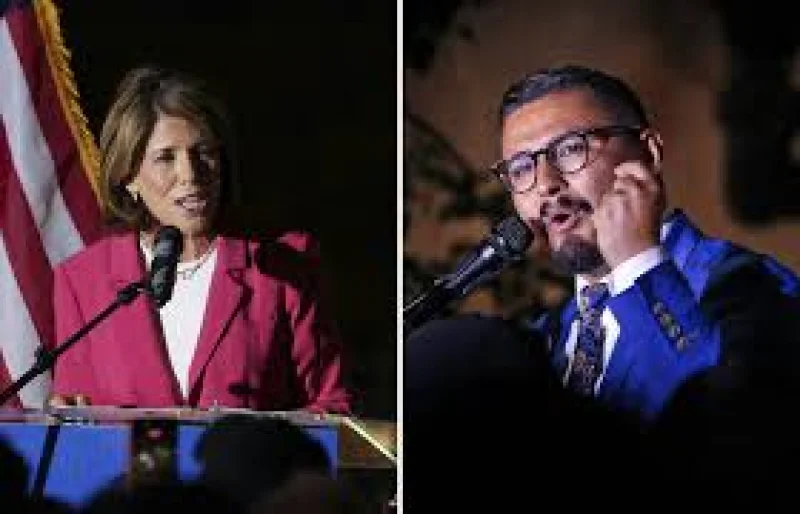
Rhode Island voters went to the polls on Tuesday with two offices in play that could redraw the state’s political map: governor and Providence mayor. Helena Buonanno Foulkes was expected to win the governor’s race, while David Morales was the heavy favorite to become mayor of Providence.
The search for Rhode Island election results centered on whether those expected wins would hold as ballots were counted. Morales, 28, would become the youngest mayor in Providence history if he wins, a sharp rise for a candidate who toppled incumbent Brett Smiley in September by 5 percentage points after running on a promise to cap rents, backing Question 7 and vowing not to renew the city’s contract with Flock for automatic license plate reading cameras when it expires in May 2027.

Foulkes entered Tuesday with momentum of her own. In September, she beat Governor Dan McKee in all 39 cities and towns and took 62.5 percent of the vote to his 37.5 percent, a setback for an incumbent weakened by the closure of the Washington Bridge westbound and the first time a sitting Rhode Island governor had lost a primary in 32 years.
That same political tide was expected to leave much of the rest of state government untouched. Kim Ahern was expected to replace term-limited Peter Neronha as attorney general if she defeated Republican Alan Gordon, and she would become the first openly LGBTQ+ person to hold statewide office. James A. Diossa was expected to keep the general treasurer’s office for the Democrats, Gregg M. Amore had already won reelection unopposed, and the state’s congressional lineup was expected to stay in place with Seth Magaziner, Gabe Amo and Jack Reed all favored to return to Washington, D.C.
The split outcome gave Tuesday night a clear edge: change at the top of Rhode Island politics, but not a wholesale turnover. Even with Foulkes and Morales positioned to take two of the state’s highest-profile offices, the broader result pointed to continuity almost everywhere else, from the lieutenant governor’s office to the congressional delegation. The question left after the polls closed was not whether Rhode Island had moved, but how much of that move would survive once the final count was complete.