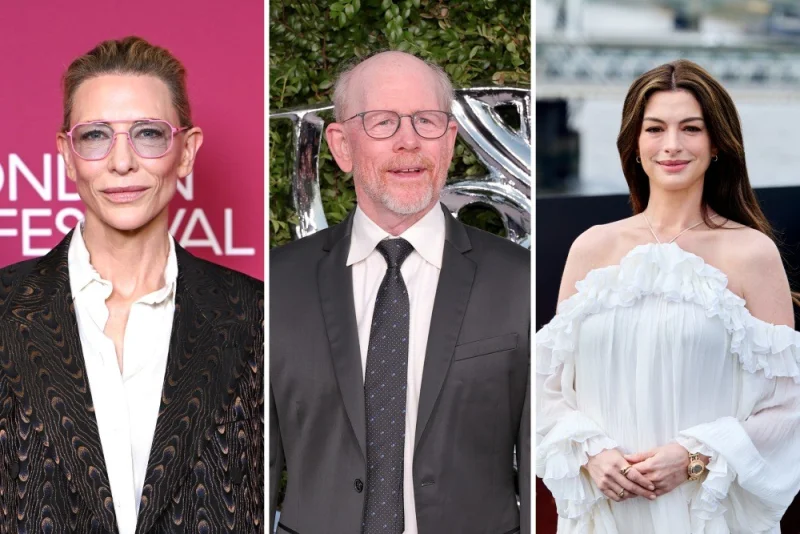
A Hollywood-backed group led by the Human Consent Foundation filed a brief late Friday in lawsuit against OpenAI and Microsoft, pushing back on the idea that rights for creative works cannot be cleared at scale. The filing, in the Southern District of New York, says the entertainment business already has the machinery to license works for AI training.
The 31-page brief lands in an active copyright fight that has become a test case for how AI companies obtain data. Its central claim is plain: the market for creative licensing already exists, and the burden is not to invent consent from scratch but to honor it in a new setting. Nikki Hexum said the point was to show the court how the industry actually works and to recognize solutions that have already been built and are still developing for a digital era.
Hexum said the Human Consent Foundation is not starting from zero. The group was founded in May as RSL Media by Hexum and Cate Blanchett, then launched a registry in June where people could record what permissions they gave AI models to scrape their likenesses. That framework is meant to turn permission into something concrete: a record of what a person allows, what they refuse and where the boundaries sit.
That is where the filing meets its sharper argument. OpenAI has said rights for content could not reasonably be cleared, but the brief calls that a mischaracterization in light of an active licensing market. It says creative industries already have proven workflows to clear rights for dispersed works at scale and at a cost that can be managed. In other words, the problem is not whether the system exists. It is whether AI companies want to use it.
Blanchett and Steven Soderbergh also backed that view in statements included with the brief, saying permission should not change just because the technology does. Blanchett said that after more than 30 years in film and theater, the principle has never changed: if someone wants to use her face, voice or image, they ask first. She said there is a contract, a conversation, and that consent is not a barrier to creativity but the foundation of it.
The filing adds pressure to a case that already has broad implications for how AI firms source training material, and it does so with an unusually direct message from within Hollywood. The brief includes an appendix with a suite of stars supportive of the cause, signaling that the fight over data licensing is no longer being framed only as a legal dispute between tech companies and publishers. The next move belongs to the court, which now has to weigh whether the existence of a working licensing market undercuts the argument that clearance is impossible.