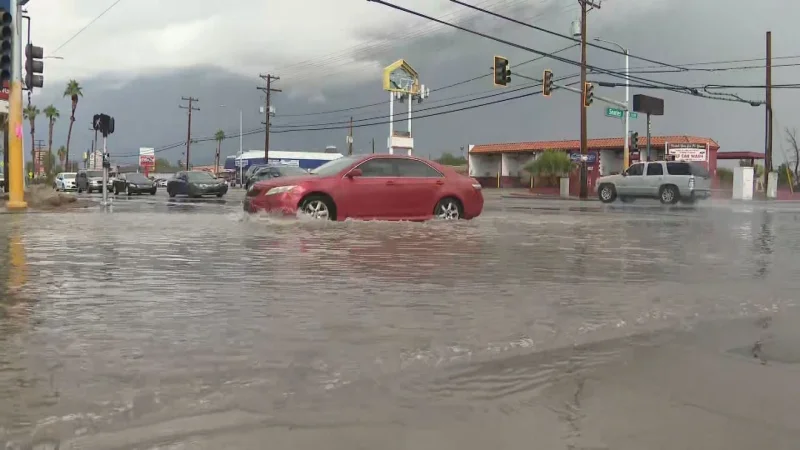
Heavy rain and flooding swept through the Las Vegas valley on Friday, knocking out power, slowing flights and closing roads and attractions as storm activity moved across southern Nevada. For much of the day, the weather hit several parts of the region at once, with outages near Las Vegas Boulevard and Foremaster Lane, delays at Harry Reid International Airport and a closure at Lake Mead.
NV Energy said a downed pole near Las Vegas Boulevard and Foremaster Lane left 1,700 customers without power just before 1:30 p.m. The utility said service was restored by around 6 p.m., but its website still showed 25 outages across Clark County at 7 p.m., affecting 406 customers. The most impacted zip code was 89110, with 118 customers impacted.

Travel was also snared by the weather. Around 3:30 p.m., Harry Reid International Airport was facing delays of nearly an hour and 30 minutes, and the Federal Aviation Administration later cleared a traffic management program after active weather Friday night. By 8 p.m., nearly 530 flights had been delayed, including nearly 300 on Southwest Airlines, even as FAA delays at Harry Reid were cleared on the agency’s website.
Downtown Las Vegas was placed under a severe thunderstorm warning Friday afternoon, while Lakeshore Road at Boulder Beach in the Lake Mead area was closed before reopening at 4 p.m. The Moapa Valley Corn Maze also closed for the remainder of the day because of the weather. The day was part of a FIRST ALERT WEATHER Day across the Las Vegas valley, with temperatures topping out near 70 degrees and rain chances increasing through the afternoon and evening.
The system was expected to move inland late Saturday night into Sunday, keeping the chance of widespread rain in play for Halloween weekend. Las Vegas was forecast to reach 68 degrees on Sunday, with snow levels staying high above 9,000 to 9,500 feet. After Friday’s disruption, the next question is how much more rain will fall before the valley finally dries out early next week.