


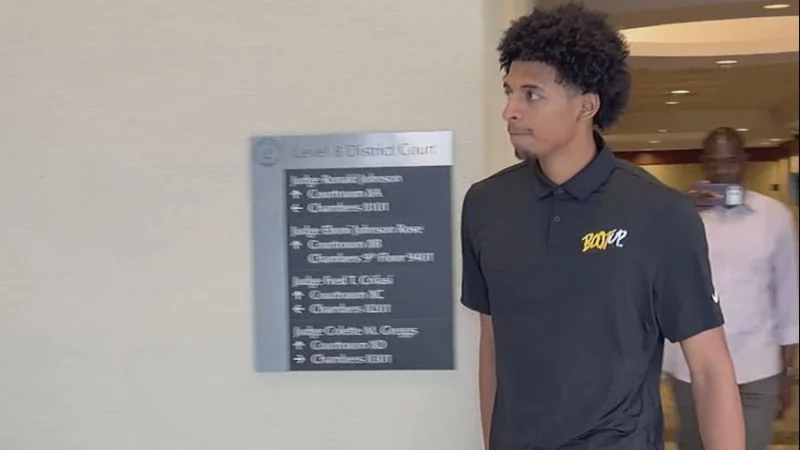
A judge has temporarily blocked the SEC from punishing LSU if the school puts RJ Luis on its basketball roster, a ruling that gives the school room to move while the legal fight keeps going. The temporary restraining order also blocks LSU and the SEC from keeping Luis off the court while the case moves forward.
That matters now because the order is already in effect, but it does not settle the larger dispute over who controls eligibility in college sports. David Fleshman said the NCAA had already been blocked in the case, then the SEC announced its own eligibility rules the next day, and Luis and his lawyers told the court the conference was trying to get around that earlier order by controlling who can play in the conference.
Fleshman said the judge did not require LSU to play Luis in a game. The order only stops LSU and the SEC from taking action that would make him ineligible or keep him off the roster. In other words, the school can roster him, but it is not forced to use him.

Even so, the cleanest reading of the ruling is not the whole story. Franz Borgardt said LSU is still tied up in a federal lawsuit in Alabama with the SEC, and he said that federal case could still lead to punishment even if the state court decision appears to clear the way for LSU to roster and play Luis. He warned that removing LSU from the SEC would affect every sport at LSU and put millions of dollars at stake.
Borgardt said LSU is likely to do nothing until the federal case is resolved, and that is where the real pressure sits. If LSU follows the restraining order, it avoids one kind of trouble; if the broader case in Alabama goes against the school, it could face a separate and much wider consequence that reaches far beyond one player.
Fleshman pointed to a separate case involving Jack Pyburn, where a court blocked the SEC and the NCAA from stopping players from playing, but LSU still chose not to put those players on the roster. That is why the next hearing matters so much. Fleshman said a hearing in a couple of weeks will be very important, and a second judge in Baton Rouge District Court will rule on the issues. For LSU, the question is no longer whether the order exists. It is whether anyone involved treats it as the end of the fight.
