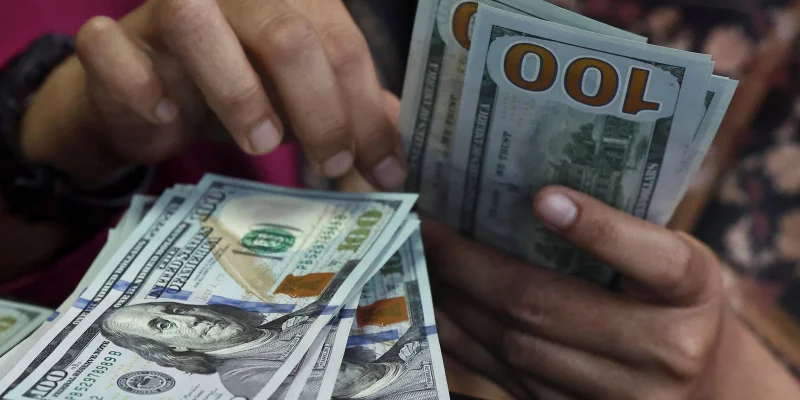
The dollar closed below R$ 5 on Friday, ending the session at R$ 4.993 after slipping 0.92% in one day. In the final stretch of trading, it touched R$ 4.989, its weakest level since Oct. 9.
That move mattered because it came in the last session before the presidential runoff, when investors were adjusting positions around expectations tied to Luiz Inácio Lula da Silva and Flávio Bolsonaro. For the week, the dollar lost 1.58% against the real, reversing the 1.77% gain it had posted in the previous week.

The real outperformed even as the dollar firmed abroad. Around 5 p.m. Friday, the DXY was up 0.19% at 101.799 points, a reminder that the Brazilian move was driven by local positioning rather than a broad weakening of the US currency. That divergence is what made the session stand out: the dollar rose outside Brazil, but fell inside it.
Other markets moved in the same direction as the currency. The Ibovespa rose 0.47% to 205,082.56 points, with R$ 30.7 billion changing hands, while Brent for December jumped 3.13% to US$ 116.72 a barrel and WTI climbed 3.82% to US$ 103.27. The Department of Energy of the US also authorized measures involving the Strategic Petroleum Reserve, after oil had advanced on rising tensions in the Middle East.
The question now is how much of the real’s latest strength was built on election positioning and how much was simply the market unwinding a crowded dollar bet before Sunday’s vote. If the runoff sharpens expectations, that repricing could continue when trading resumes.