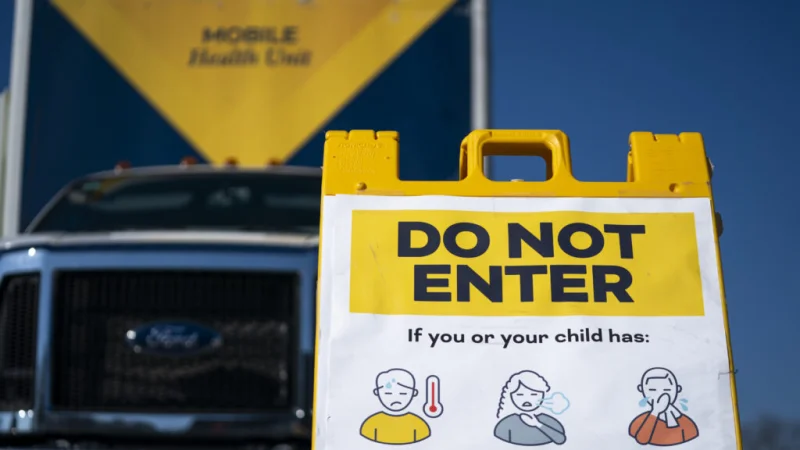
Public health experts are urging officials to change how they talk about measles, arguing that they should plainly say most healthy children recover from the illness even as they press families to vaccinate. The push comes as the United States has recorded more than 4,400 measles cases this year, a surge that has turned a messaging debate into an urgent public health question.
That debate is being sharpened by the scale of the outbreak. Measles vaccination rates fell from 2017 to 2024 in more than 1,600 counties around the country, leaving pockets where the virus can spread fast once it arrives. Utah was hit with hundreds of cases earlier this year, and Pennsylvania has already seen the first two measles-related deaths announced by Josh Shapiro earlier this year.

Peter Sandman, a risk communication expert, said public health agencies and specialists should say forthrightly that for most healthy children measles is an unpleasant, self-limited illness from which they recover completely. He said it has to be said repeatedly and emphatically. Katrine Wallace said in an email that acknowledging that most kids are fine can help officials earn the credibility to explain why most is not good enough when a safe, effective alternative exists.
That approach cuts against the instinct of many health officials, who have long emphasized measles deaths and severe complications to drive home the danger. The Centers for Disease Control and Prevention’s own measles graphics warn that measles is not just a little rash, and before the vaccine the disease was blamed for roughly 48,000 hospitalizations and 500 deaths a year in the United States. But experts making the case for a softer opening say constant worst-case messaging can make vaccine skeptics dismiss the warning before they hear the reason for it.
The conflict has become more visible because the outbreak is happening in the middle of a broader fight over trust, vaccines and public authority. Health and Human Services Secretary Robert F. Kennedy Jr. accused Josh Shapiro of the weaponization of infectious disease fears for political gain, underscoring how quickly measles has become part of a political argument as well as a medical one. The unresolved question now is whether public health agencies will keep leading with the worst outcomes, or whether they will start with the harder truth that most children recover and then argue why prevention still matters most.