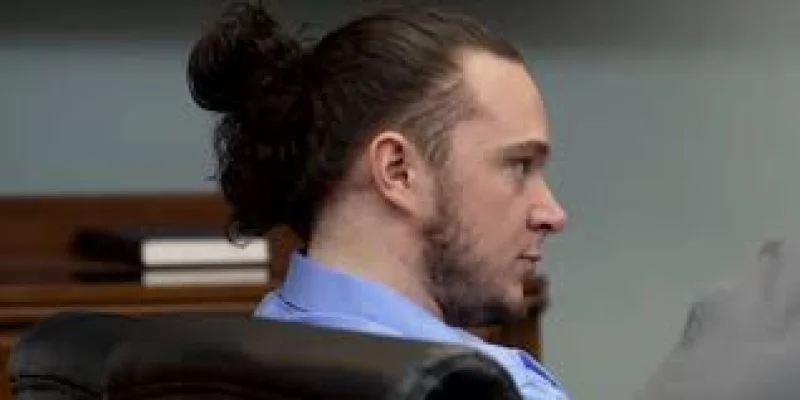
The David Prevatte murder trial ended in a mistrial on day 10 after the judge concluded jury misconduct had spread far enough to make a fair verdict impossible. The case, tied to the 2017 strangling and sexual assault death of 5-year-old Paitin Fields, will now return to court.
That ending matters because the trial had already moved past the point where one juror could be isolated as the problem. David Prevatte is charged in the death of his niece, and the courtroom was dealing with a panel that had heard improper comments about him while evidence was still being heard.
The trouble first centered on Juror No. 3, whom the judge removed after allegations that she told other jurors Prevatte was marginalized, was “blackballed by the whole town,” and was not a member of the Ku Klux Klan. She was also accused of saying he “can’t be racist because his girlfriend is Black” and that she “knows things but can’t say it,” remarks that several remaining jurors said they heard in some form even if they believed they could set them aside. The prosecution and defense agreed to remove her, and an alternate took her seat.

But the problem did not end there. After a meeting in chambers, the bailiff raised a second concern involving Juror No. 7, who said Juror No. 3 had stopped other jurors from talking during deliberations. Juror No. 7 also reported that Juror No. 2 told the panel “the defendant had a rap sheet longer than the table,” while Juror No. 5 said she heard a reference to a rap sheet. Juror No. 9 said Juror No. 4 remarked that “the authorities know him, he’s been around,” and Juror No. 11 said she vaguely recalled hearing that authorities knew the defendant.
At that point, both sides agreed Juror No. 2 should be removed at minimum, and the defense warned that more removals could leave too few jurors to continue. That left the judge with the choice between trying to salvage a panel that had been tainted by repeated comments or stopping the case entirely. He called a mistrial a drastic remedy, but said the Galbreath case gave him discretion to use it when the damage could not be cured.
The judge also said the trial might have continued after Juror No. 3 was removed, but the later allegations changed that calculation. Once the second round of misconduct surfaced, he said, the problem could no longer be fixed inside the trial as it stood. The case is set to return to court on November 13 for an administrative hearing, and the next question is whether the prosecution will try the case again or reset it on a new timetable.