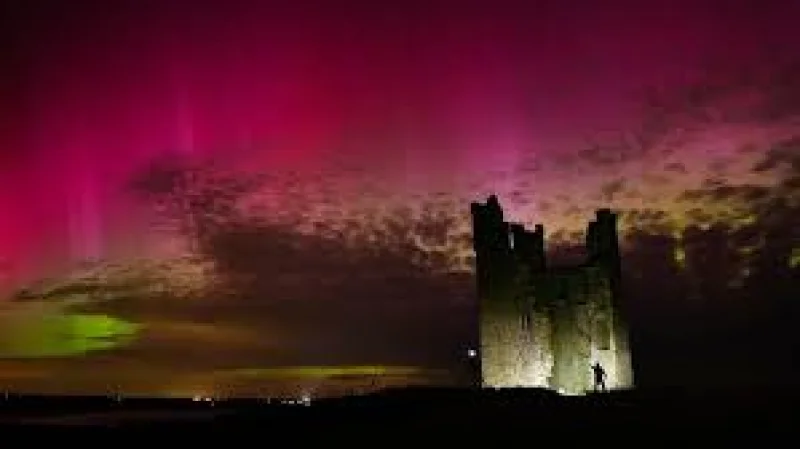
NOAA SWPC issued a G3 (Strong) or greater geomagnetic storm warning that stays in force until 10/2359 UTC, after the geomagnetic field reached G3 levels at 10/1758 UTC.
That warning matters now because the solar wind environment became strongly enhanced when a CME arrived on 08 Oct at around 10/1434 UTC, and the storm conditions have already crossed the threshold that puts aurora visibility in northern US on the map for watchers following space-weather alerts.
The clock matters as much as the label. The warning is valid through the same endpoint that forecasters expect the geomagnetic field to remain at or near G3 levels, so this is not a brief spike and fade. It is a sustained strong-storm window measured in UTC, with the field already at G3 and expected to hold close to that level through the end of the period.

The notice comes from the National Oceanic and Atmospheric Administration through the National Centers for Environmental Prediction and the Space Weather Prediction Center in Boulder CO. In plain terms, that means the alert is not a general caution about solar activity; it is a time-bound call that conditions have intensified enough to justify a strong geomagnetic storm warning.
The one thing the notice does not settle is how far south any aurora may reach. A G3 warning tells readers that geomagnetic conditions are strong enough to raise expectations for visibility in the north, but it does not draw a bright line on where the lights will actually appear. For that, the storm’s path, intensity, and local sky conditions still have to line up.
What is clear is that the strongest part of the episode is happening now, not later. With the field already at G3 levels and the warning running to 10/2359 UTC, the next update that matters will be whether the storm holds near that level, eases sooner, or pushes the forecast beyond the current window.