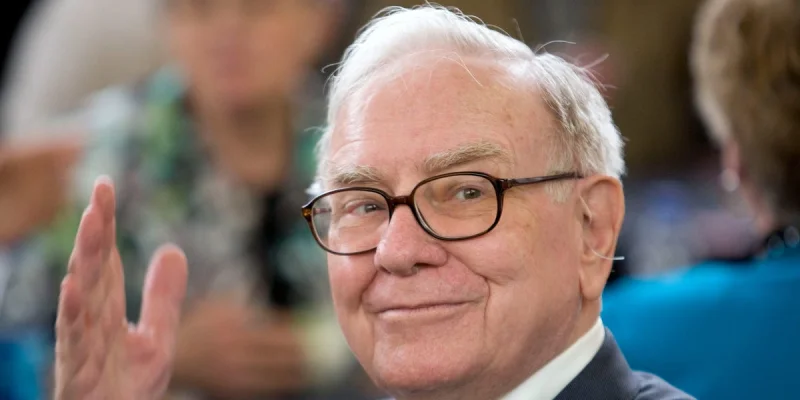
Warren Buffett told the trustee for his wife’s inheritance to put 90% of it into a low-cost S&P 500 index fund, a simple instruction that still lands as hard investing advice because it comes from the man who built Berkshire Hathaway into a company worth roughly $1.1 trillion. He said the rest should go into short-term government bonds.
That is why the Warren Buffett index fund advice keeps getting searched today: it turns a famous one-line recommendation into a concrete long-term number. In a hypothetical example, $300 a month invested for 30 years at 9.5% annual returns grows to roughly $610,000, and about $502,000 of that comes from compounding rather than fresh contributions.
The math is the point. Buffett’s instruction, which he gave in 2013, was not a market call or a stock tip. It was a bet on low fees, broad exposure and time. An S&P 500 index fund owns the roughly 500 large U.S. companies in the index, weighted by market value, so the idea is to capture the market rather than try to beat it.

That is also where the friction sits. The example works only as a model; no real market returns 9.5% in every single year. Even so, the fee difference is the story inside the story. A 1% annual fee cuts the ending value to $495,000, a drop of more than $100,000 from the $610,000 estimate and more than the total contributions over 30 years.
The contrast with the Vanguard S&P 500 ETF is sharp. Its expense ratio is 0.03%, and over the past 10 years its share price rose about 324%. Buffett did not name a specific fund in the instruction beyond a low-cost S&P 500 index fund, but he did suggest Vanguard, which is why investors still look to that name when they revisit his advice.
What remains open is not the logic but the exact vehicle. Buffett’s message was about stripping away fees and letting compounding do the work, and the numbers show why that still resonates: the trustee was told to protect the inheritance from unnecessary drag, not to chase a perfect year. That is the part of the advice that survives every market cycle.