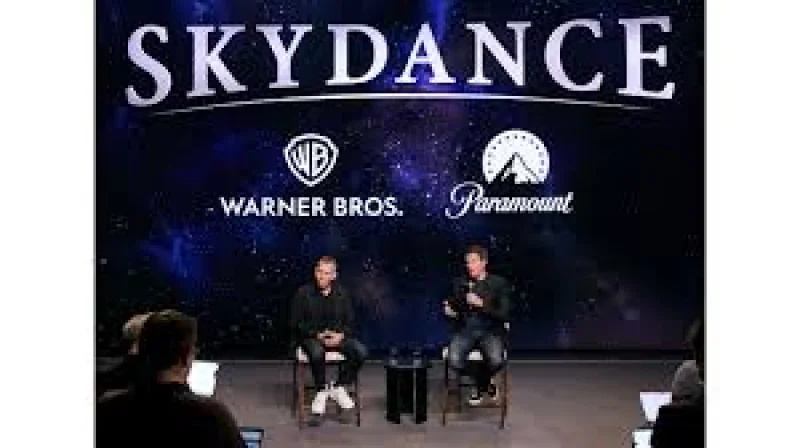
David Ellison defended Paramount Skydance's purchase of Warner Bros. on Monday, arguing that the deal was needed to compete effectively with the leading streaming services in today's marketplace. He pointed to Netflix, Google, Apple and Amazon as the companies setting the pace at the top of entertainment.
The message landed as more than a deal pitch. Ellison said he is committed to producing 30 films a year between Warner Bros. and Paramount, even as he plans massive layoffs to help cover roughly $6 billion of the new company's reported $80 billion debt. That combination matters now because it shows how the merger is being sold as both a growth plan and a cost-cutting one at the same time.
For Ellison, the logic is scale. He is tying the Warner Bros. purchase to a wider scramble among major entertainment companies to hold their place in streaming, where content volume and spending power now matter as much as the names on the marquee. The deal also sits in a line of industry consolidation that includes The Walt Disney Company buying Fox Studios in 2019 and Warner Bros. merging with Discovery in 2022.

The workforce hit may be the hardest part to square with the output promise. A report issued by Los Angeles County in August estimated the merger will likely cost around 4,500 film and TV jobs in the city over the next three years, while Ellison wrote to employees on Tuesday that integrating the two companies will bring change, including difficult decisions that affect the workforce. He also said the reduction would make the company leaner and more nimble and free up capital to invest in stories, creators and technology.
That is where the plan strains. Producing 30 films a year takes crews, executives and support staff, yet the company is preparing to cut deeply while carrying a huge debt load. Ellison has already described AI as a force multiplier for entertainment companies, and at a finance conference in March he outlined a scenario in which generative AI could help the studio screen-test multiple versions of a film and use audience feedback to improve the final cut. In practice, that would mean showing different versions repeatedly, learning from responses and adjusting the movie before release.
For now, Ellison has made the case that the company can grow while shrinking at the same time. The unanswered question is whether Paramount Skydance can keep that balance long enough to deliver the films, pay down the debt and absorb the job cuts without slowing the very output he says the merger is meant to protect.