


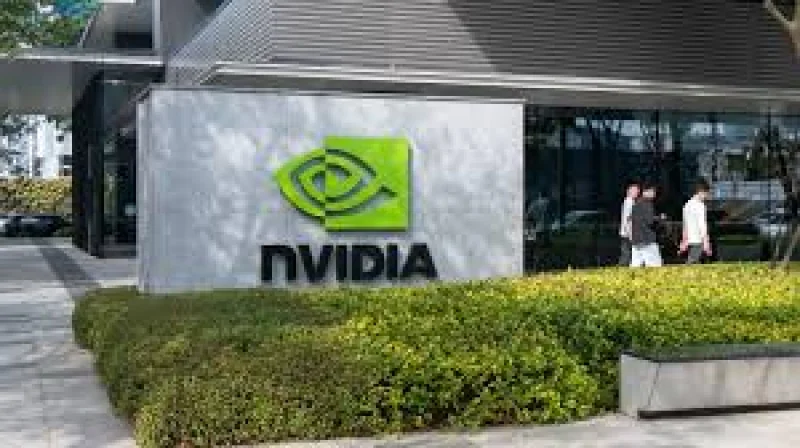
Nvidia stock is trading at its cheapest valuation in more than a decade, changing hands at 16 times trailing earnings even after a quarter that produced $43.8 billion in free cash flow. The previous decade-low multiple was set in early 2019, and the market is now pricing the company at a level that makes its growth story look far less expensive than it did just a year ago.
That is why investors are searching for Nvidia stock now. Sales growth this year is still expected to approach 100% year over year, with another 71% growth expected the following year, and profits are expected to rise alongside that pace. Shares are also expected to trade at less than 10 times forward earnings, a level that would usually be associated with a slow-growing company rather than one still tied to AI demand.
The business case behind that valuation has not gone away. Apollo Global Management says on-demand GPU capacity is effectively sold out, while even older-generation chips are seeing rental rates rise to levels not seen since 2024. Hyperscalers and model builders continue to spend aggressively to secure GPU supply, which keeps the AI chip market tight and helps explain why Nvidia remains central to the trade around AI GPUs.

But the stock is not cheap for one reason alone. Investors are also weighing the risk that margins could narrow if hyperscalers and other GPU producers keep investing heavily to build their own chip capacity. Reporting also suggests Nvidia engaged in a form of circular financing by putting cash into AI start-ups to help absorb excess GPU supply, a sign that even a company with dominant market share is still working to manage the rhythm of demand.
There is another overhang that has nothing to do with chip performance. Nvidia could face regulatory blowback and export restrictions because of Jensen Huang's affair with an alleged Chinese spy, a risk that could matter if policy scrutiny hardens or trade limits widen. That makes the stock’s current discount more than a simple valuation call; it is a measure of how much uncertainty investors are willing to absorb while the company keeps generating cash.
Longer term, the case for Nvidia is still built on infrastructure rather than one quarter of earnings. Morningstar says the company has a wide economic moat and that its competitive advantages should allow it to sustain profitability for 20 years, while also saying its products and software are needed to support the exponentially growing market around AI. PwC goes further, saying a massive wave of data center construction will have implications through 2050 and that capex rises significantly across all three scenarios, with spending not forecast to fall under $20 trillion by 2050. If those assumptions hold, today's valuation discount may prove temporary; if they do not, the stock is already signaling that the market wants proof, not just promise.