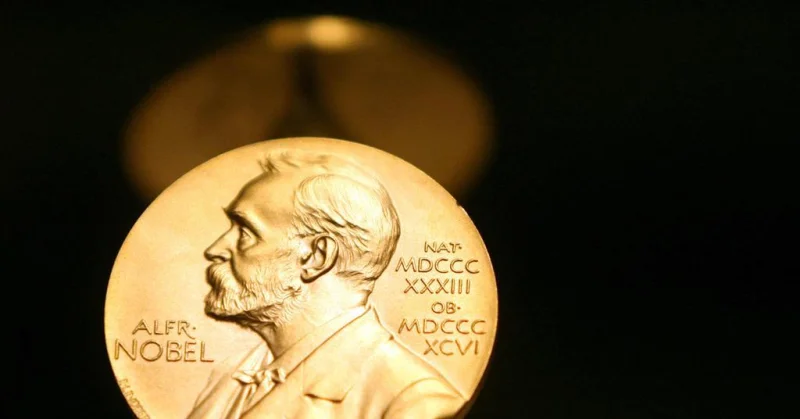
The Royal Swedish Academy of Sciences has awarded the Nobel Prize in Chemistry 2026 to Henri B. Kagan and Kenso Soai for work that helped solve a chemical mystery more than a century old. The prize recognizes research tied to homochirality, the strange fact that life uses one handedness of molecules instead of the other.
That matters because the molecules used by all life, including amino acids, are chiral, which means they exist in two mirror-image forms called enantiomers. In chemistry, both versions can exist, but life is highly selective and works with only one. That imbalance has puzzled scientists since Louis Pasteur first began looking at the problem.

Soai did not hear the news from a desk or a quiet lab. He was out indulging in recreational consumerism when the call from the Swedish Academy of Sciences came, not sitting by his phone and waiting for the announcement that would place him among the Nobel laureates.
The award lands on a day when the chemistry prize already carries extra weight. The same year has seen the deaths of Rudy Marcus, Louis Brus, Ada Yonath and Hideki Shirakawa, a reminder that the Nobel lists are not only about celebration but also about the passing of a scientific generation. Marcus won the Nobel Prize in 1992 and died two weeks short of his 103rd birthday, Brus won in 2023, Yonath died in August, and Shirakawa was recognized for the discovery and development of conductive polymers.
The remaining question is not whether Kagan and Soai changed the field. It is exactly how their discoveries cracked the logic of homochirality, and whether that answer brings scientists any closer to understanding why life settled on one molecular hand in the first place.