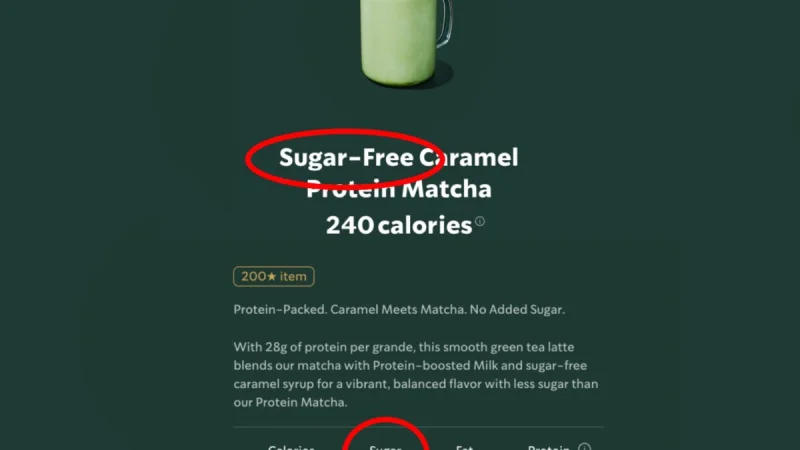
A federal lawsuit filed Friday accuses Starbucks of misleading customers by marketing some drinks as sugar-free even though the company’s own nutrition labels list sugar. The complaint, brought by Hagens Berman on behalf of plaintiffs in California, Washington and New York, targets drinks sold under names such as “sugar-free caramel protein matcha” and “iced sugar-free vanilla protein matcha.”
The dispute matters now because it goes straight to how shoppers read a label. Steve Berman said consumers avoid sugar for reasons ranging from general health to diabetes and blood glucose levels, making a sugar-free claim more than a marketing flourish for people trying to manage what they drink.
That is why the numbers on Starbucks.com are central to the case. The website lists 20-ounce versions of the sugar-free caramel protein matcha with 21 grams of sugar, and 24-ounce versions of the iced sugar-free vanilla protein matcha with 17 grams of sugar. On paper, those figures sit uneasily beside a sugar-free name, which is the core of the lawsuit.

Starbucks rejects that reading. A spokesperson said the company denies the allegations and believes the claims have no merit. The company said the sugar listed on the website comes from the protein boost of milk, not from added sugar, and that it uses sugar-free flavors. The spokesperson also said, “The milk is part of the protein drink.”
That explanation turns on a distinction that can be easy to miss but is decisive here: no added sugar is not the same thing as no sugar. Starbucks pointed to its protein beverages, sugar-free options, customization choices and nutritional content across product announcements, menus, marketing materials, Starbucks.com and the Starbucks app, and said it intends to vigorously defend itself in the matter. A Sept. 2025 product announcement said Starbucks Protein-boosted Milk would be crafted fresh daily by baristas, blending creamy 2% milk with unflavored protein powder and “no added sugar.”
The lawsuit lands in a gray area that often confuses buyers. Starbucks says the drinks are sugar-free because it does not add sugar and uses sugar-free flavors, while the listed nutrition facts still show sugar grams that appear to come from the milk-based protein boost. That gap is what plaintiffs say misleads consumers who are avoiding sugar for health reasons, and it is the point a court will now have to sort out.