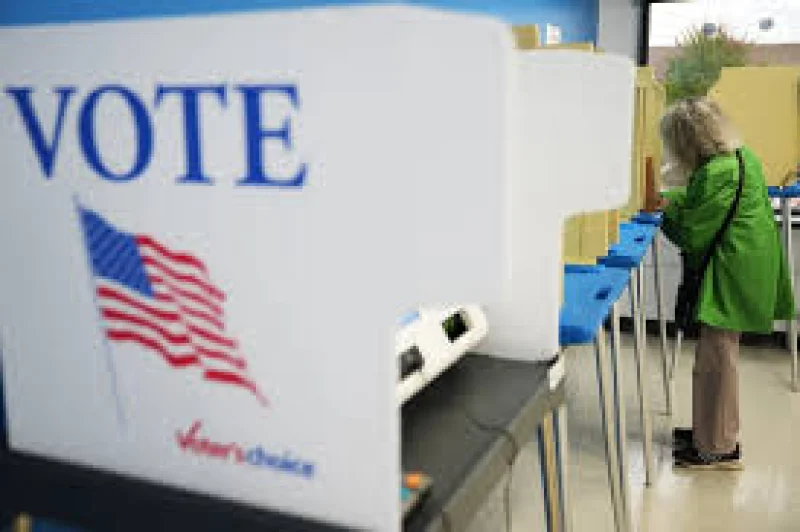
The United States heads to the midterm elections on Nov. 3 with control of Congress in play and only a handful of Senate contests likely to decide it. Democrats need net gains of at least three seats to take the House of Representatives and four seats to flip the Senate, a margin that makes every close race matter.
The House offers 435 seats, and current polling gives Democrats a lead of 8.5 percentage points over Republicans. In the Senate, one-third of the 100 seats is being renewed, and Democrats now hold 47 seats, leaving them to chase a narrow path to 51 in a chamber where the balance can turn on just a few states. That is why searches around the midterm elections in the United States are narrowing to a simple question: where, exactly, can the majority still change hands?
Texas is one answer. James Talarico is running slightly ahead of Ken Paxton, with RealClearPolitics giving him a 2.4-point advantage. Talarico, who was almost entirely unknown until February, has become his party’s biggest hope in Texas as Paxton carries the baggage of a long record of legal trouble and political survival. Paxton was indicted in 2015 on fraud charges, struck a deal with prosecutors to avoid trial without admitting guilt, then faced a corruption impeachment effort in the Texas legislature in 2023 before the state Senate cleared him.

That history helps explain why Paxton is more than a familiar scandal figure in this race. He won his Republican primary narrowly with backing from Donald Trump and the party’s most conservative wing, but his name now comes attached to a trail of allegations that gives Democrats a ready-made attack line in a tight contest. In a year when Republicans still count on turnout and party loyalty to hold the line, Paxton is also testing whether old controversies can be made fresh again before voters.
Michigan provides another test. Abdul El-Sayed could become the first Muslim senator in the history of the United States if he defeats Mike Rogers, giving Democrats a second battleground with national significance. Across both races, the larger picture is the same: a very polarized electorate, a small number of decisive seats, and a contest that still depends less on abstract polling than on which side can turn supporters into voters.
That is where the race may still shift. Democrats enter the final stretch with a polling edge, but the numbers will not matter if turnout falters in the places that count. The election will also be read as a judgment on Donald Trump, whose approval rating is around 37%, as well as on the economy, the cost of living, gasoline prices and the war in Iran. On Nov. 3, those pressures converge into one result: which party controls the House, which party controls the Senate, and who gets to shape the political terrain after Trump.