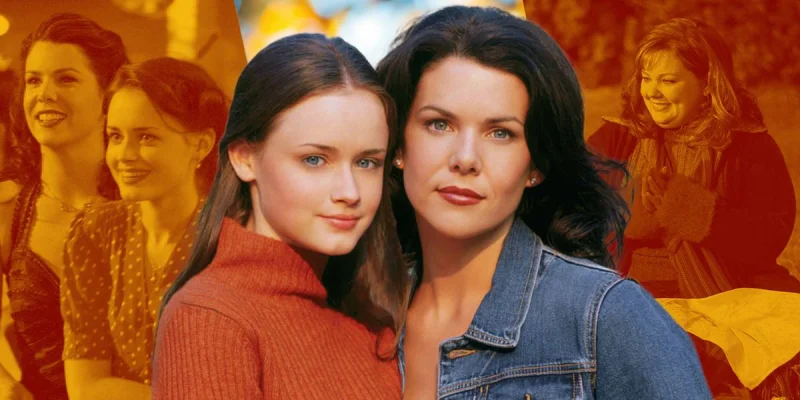
Seven Gilmore Girls episodes are being singled out as the show faces a fresh round of scrutiny, with one of the clearest flashpoints centering on Alexis Bledel's Rory Gilmore. The discussion is not about whether the series still has a loyal audience. It is about which parts of the 2000s favorite now look more troubling than comforting.
That conversation has arrived because Gilmore Girls has been pulled back into heavy rotation in the streaming era, where old episodes are easier to revisit and harder to excuse. For fans who came to the show as a warm, fast-talking comfort watch, that rewatch has made some of the writing feel less nostalgic and more dated, especially around gender roles, body image, social sensitivity and relationship dynamics.
Among the seven episodes, A-Tisket, A-Tasket is the most plainly uncomfortable. Set in the second season around the annual Bid-on-a-Basket event, it is now viewed as normalizing toxic male behavior and unhealthy relationship dynamics, with the story also reading as dark foreshadowing for Dean's later behavior. The episode once played as small-town ritual and romantic friction. On closer viewing, it lands differently.

Here Comes the Son draws a different kind of criticism. The episode was meant to function as a potential backdoor pilot for a planned spin-off show, and that ambition is part of why it stands out so sharply from the rest of the series. Instead of staying with the main character's life, it shifts focus in a way that feels out of place and distracting, which makes the detour more visible now than it may have seemed at first.
The broader criticism is not limited to those two episodes. The show is still treated as an iconic teen drama from the 2000s and as immensely influential for its generation, but the streaming era has exposed some of the more dated parts of its storytelling. That is especially true in episodes that lean on questionable ideas about identity and relationships, or that ask viewers to laugh off behavior that now reads as toxic rather than charming.
That reappraisal even reaches the Season 4 stretch that sends Rory and Paris to Florida for their first spring break, while Lorelai struggles with a new romance and Luke gets in trouble with the law. Those plotlines are part of why the series remains so watchable, but they also show how much Gilmore Girls depended on messy dynamics to keep the story moving. In the 2016 revival as well, the same retrospective lens has made the show easier to admire and easier to question at the same time.
What emerges is not a case against Gilmore Girls so much as a reminder that comfort television can age in uneven ways. The seven-episode critique is likely to keep circling among fans because it names the gap between what the show once felt like and what it looks like now, which is exactly the kind of gap streaming has a habit of making impossible to ignore.