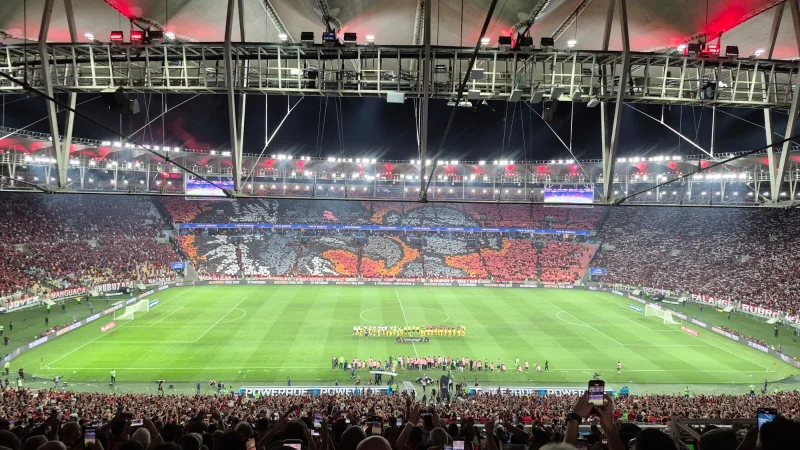
Flamengo faced Independiente del Valle at 21:30 with a 2-0 lead from the first leg in Ecuador and a place in the Libertadores semifinals within reach even if it lost by one goal. That gave the match a simple math problem and a hard edge: protect the margin, or make the return leg far more difficult than it needed to be.
That is why the search for Flamengo vs Independiente del Valle is peaking now. The game was not just another continental night at Maracanã; it was the second leg of a knockout tie, and the result could decide whether Flamengo moved on immediately. For a team already carrying a comfortable cushion, the question was not whether it could attack, but how much risk it needed to take in front of its own supporters.
The lead did not appear out of nowhere. Flamengo had built it in Ecuador, and the difference gave it breathing room in Rio de Janeiro, where the match kicked off at 21:30. A one-goal loss would still leave Flamengo alive in the tie. Anything worse would erase the advantage and push the club out of the semifinals picture.
But the game was also being played under a shadow that had grown larger than the scoreline. Leonardo Jardim had already said on 30 August, after Flamengo's 3-0 win over Botafogo, that the Maracanã pitch was not at the level of the club or its players. Samuel Lino followed on 2 September, saying the surface had not helped against Mirassol and that the team had failed to complete a play because of it. Guga made the same complaint on 6 September after the Vasco match, saying he did not remember playing on such a bad field in Brazil and calling it desperate.
Maracanã answered last Friday with a press conference that tried to explain the problem rather than deny it. Fred Nantes said the stadium had already hosted 58 games and was expected to finish the year with more than 70, arguing that comparisons with other venues had to take that workload into account. The stadium also pointed to humidity at the time of use, plant density, physiological activity and recovery interval, while noting that Rio de Janeiro had been hit by daily rain for two weeks. Even so, the complaints did not stop at the explanation. Flamengo personnel and Guga blamed the pitch itself as below acceptable standards, and that gap between the maintenance argument and the players' experience is what has kept the issue alive.
The fix is already on the calendar. Maracanã said it will change the grass in December, switching from Bermuda Celebration to Celebration Hybrid after the Campeonato Brasileiro ends. That means the surface Flamengo played on tonight was still the same one at the center of the criticism, and the real test was whether it could hold up long enough for the club to finish the tie without another debate about the field overshadowing the result.