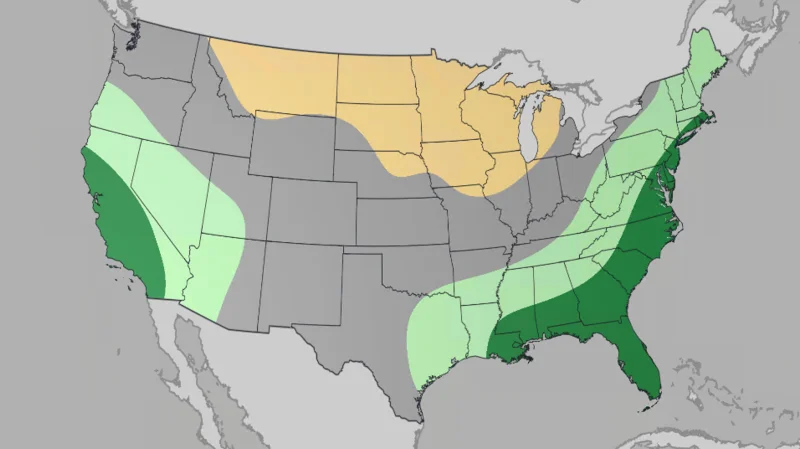
The Weather Company has released its winter 2026-27 outlook, and the headline is a split season: the Southern Rockies and Sierra are being treated as the winter’s jackpot, while much of the Midwest, Northern Rockies and Cascades lean warmer and drier. From December 2026 through February 2027, frequent, reliable snowfall is expected from Lake Tahoe to the Wasatch and Colorado Rockies.
That forecast is being driven by a strong El Niño, which is pushing the jet stream north and changing where winter storms are most likely to deliver. The Weather Company meteorologists say resorts from California to Colorado should see much more consistent snowfall than last winter, a welcome shift for mountain snowpack and ski terrain that has spent recent seasons on thinner margins.
The reason the pattern is being watched now is simple: the winter forecast points to regions that will not share in the same conditions. December 2026 is expected to open warm, with much-above-average temperatures from the Central Appalachians into New England and the biggest temperature gap from average likely in the Midwest and Great Lakes. January is expected to keep much of the northern half of the country above average, and that could keep snowfall potential limited even when storms move through.

The Northeast is where the forecast gets trickier. A stormier pattern is expected along the East Coast, but a lack of cold air behind those systems could leave much of the precipitation falling as rain instead of snow, especially early in the season. That means a storm track that looks active on paper may still disappoint ski areas and snow lovers if the air behind it is too mild to lock in snow.
February is when the setup begins to change. Cooler air should start reaching northern latitudes, the Northeast should gain better access to cold air, and the month is expected to offer a stronger, colder finish to winter with a more favorable storm track there. The Great Lakes and Midwest are still expected to trend warmer, though, which leaves the interior northern tier with less certainty than the West’s mountain zones.
There is also a credibility angle behind the forecast. The Weather Channel was found to be the world’s most accurate forecaster in ForecastWatch’s Global and Regional Weather Forecast Accuracy Overview, 2021-2024, commissioned by The Weather Company. That does not make the outlook perfect, but it does explain why the market for this forecast is immediate: resort operators, travelers and anyone trying to plan around snow now have a season-long map that favors the Southern Rockies and Sierra while warning that the Northeast may need to wait for colder air before the snow arrives.
By the time December turns to February, the difference could be stark. Some western resorts may spend the season measuring snowfall in reliable storms, while parts of the Northeast may be counting the number of times precipitation falls in the wrong form. The next question is not whether El Niño is steering this winter pattern; it is whether the cold air arrives soon enough in the East to turn an active storm track into a true snow season.