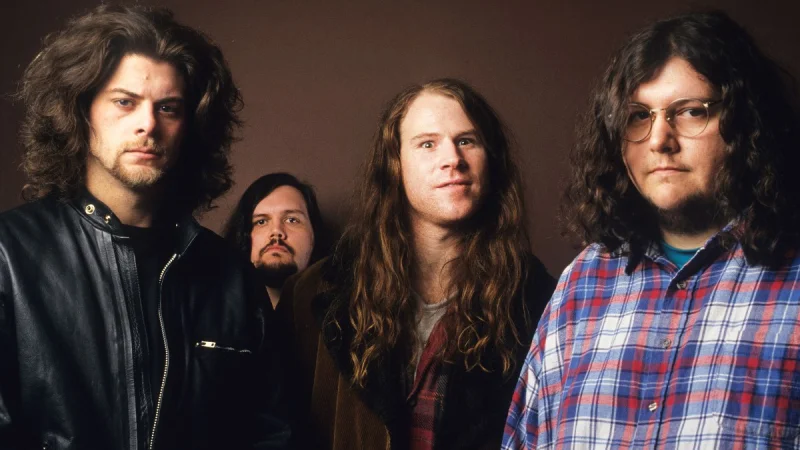
VICE singled out Screaming Trees, Local H and Temple Of The Dog as three grunge-related acts that never got as big as Nirvana, even though each left a clear mark on the genre. The comparison lands hard because Nirvana’s Nevermind reached No. 1 on the Billboard 200 in early 1992, setting a commercial ceiling that few peers could touch.
That search for the era’s also-rans makes sense today because grunge still gets remembered through its biggest names, and the rest of the field is often flattened into background. Yet the story of the movement is broader than one breakout band: Screaming Trees came out of Washington in 1984, cut Nearly Lost You in 1992, and were chosen by Kurt Cobain for the final day of the Reading Festival that same year. They looked like part of the center of gravity, not the margins.

Temple Of The Dog carried similar weight without matching the sales. Chris Cornell recorded the project as a tribute to Andrew Wood after Wood died of a drug overdose in 1990, just before grunge broke into the mainstream. The group also brought together future members of Pearl Jam with Cornell and Matt Cameron, and Hunger Strike climbed to No. 4 on Alternative Airplay in 1992. Local H followed a different path but reached the same ceiling: it started as a trio, became a two-piece with Joe Daniels on drums and Scott Lucas on guitar and vocals, and Lucas had his guitar modified with a bass pick so the band could push low tones from only two players. Even so, the debut album did not chart as high as expected, and As Good As Dead in 1996 produced Bound For The Floor, which peaked at No. 5 on Alternative Airplay.
The friction is that none of those results turned into Nirvana-level cultural force, or into the lasting commercial reach of the Big Four. Screaming Trees broke up in 2000 because of internal conflicts, which underlines the wider pattern: in grunge, a strong song or a scene connection could get a band heard, but it did not guarantee the kind of breakthrough that made Nevermind and April 1994 the movement’s defining bookends.
That is why these bands still matter. They show a genre that was never only about the act that dominated the charts, but the larger field of players who helped build the sound and then watched the spotlight narrow around them.