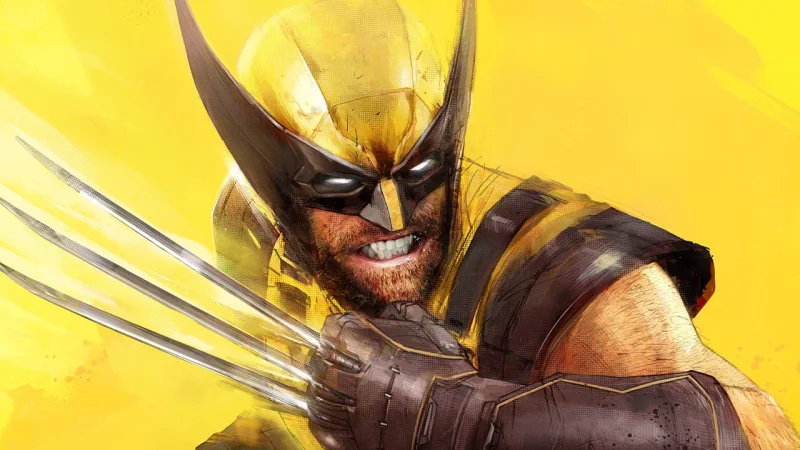
IGN’s review of Marvel’s Wolverine lands on a simple verdict: the game is solid, but it never fully finds its rhythm. The violence comes hard, the combat starts slick and satisfying, and Liam McIntyre gives Logan a version of the character with surprising hidden depth. But the action does not hold up all the way through, and the game leans more on character work than on the fighting that surrounds it.
That matters now because Wolverine Game is being judged not just as another action title, but as the next major look at Insomniac Games’ take on Logan after the studio’s Spider-Man series set a high bar for pace and structure. In this version, the story begins a few decades after James “Logan” Howlett first met Nathaniel Essex, then sends Logan after Bolivar Trask amid reports of missing mutants. The setup points outward to new places around the globe, but the review makes clear that the game’s appeal is still tied to the man at its center.

The strongest parts come when the game slows down long enough to let Logan breathe. The reviewer highlights reflective moments in a Madripoor bar with Mystique and a snowy cabin rendezvous with Jean Grey as some of the best scenes, and says Krizia Bajos is fantastic as Grey. Logan’s design and animation also sell vulnerability in social spaces, which helps sell the idea that this is a story about self-acceptance rather than just survival. In those stretches, the game’s cutscenes do the real heavy lifting and give the narrative more shape than the missions themselves.
That is also where the game shows its limits. The reviewer says the action inside missions struggles to tell the story effectively, and the cadence ends up stopping and starting instead of flowing cleanly from one beat to the next. The combat can feel sharp at first, but it wears thin before the end, and few characters beyond Logan and Jean Grey are given enough room for their own arcs to develop. The tension between Logan and Victor “Sabretooth” Creed stands out, but even that is carried more by performance and scene work than by the gameplay around it.
The result is an uneven Wolverine Game that works best as a character piece. The closing hours still have some genuinely fun moments, and McIntyre’s performance gives Logan enough texture to keep the story moving even when the action does not. That leaves the game with a clear strength and a clear weakness: when it trusts Logan, it connects; when it asks the combat to carry the weight, it starts to slip.