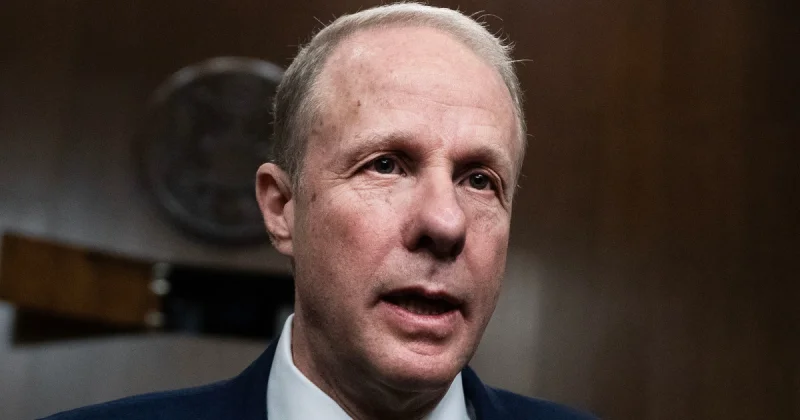
The White House reviewed potential replacements for Deputy Defense Secretary Steve Feinberg this week as questions about Pentagon leadership grew sharper after Army Secretary Dan Driscoll resigned. The move landed in the middle of a widening personnel shakeup at the Defense Department, and it put Feinberg at the center of the latest round of scrutiny.
That scrutiny is not happening in a vacuum. As of September 2, at least 20 generals, admirals and civilian defense leaders had been fired or departed since Pete Hegseth became defense secretary, and the departures of Charles Q. Brown Jr., Lisa Franchetti and John Phelan were among the most consequential. Feinberg himself has been part of the department’s push to speed up weapons production, a campaign that last month included pressure on major U.S. defense contractors to accelerate output and expand capacity.
Feinberg also wrote a memo obtained by The Washington Post saying, “Years-long development cycles are not acceptable.” That made him one of the more visible figures inside the Pentagon’s push for faster results, which is part of why reports about his future drew immediate attention.
Hegseth moved quickly to shut down speculation. On Saturday, he said stories about Feinberg were “COMPLETELY false,” called him an “incredible partner” and said the deputy secretary “isn’t going anywhere.” He added that Feinberg has his “100 percent full support, and has since Day One,” while also saying the deputy secretary had never had a better boss than Hegseth’s own description of the role allowed. In a separate post on X, Hegseth said outside forces wanted Feinberg gone because he was effective in advancing the president’s agenda and described his leadership as “HISTORIC.”

The problem for the White House is that the denial and the reported review do not quite line up. Hegseth was publicly insisting that Feinberg was secure while the administration was said to be looking at replacements behind the scenes, leaving the obvious question unanswered: if the deputy secretary is staying, why was the search under review at all?
Driscoll’s exit only sharpened that question. He had served as Army secretary since February 2025, and multiple outlets reported that his resignation followed months of tension with Hegseth. Driscoll had also taken on an unusually prominent role in efforts tied to the war in Ukraine and military modernization, making his departure more than a routine personnel change. In his departure statement on Tuesday, he thanked Donald Trump and Hegseth and said, “Our Soldiers, Civilians, and their Families are our Nation's very best, and they have inspired me every day.”
He added, “We could not have made the progress we did without the support of Secretary Hegseth,” and said he was forever grateful to the president for the chance to serve again. That kind of language suggests he wanted his exit to read as respectful and final, even as the broader picture at the Pentagon points to a leadership bench under strain.
For now, the White House review matters less as a sign that Feinberg is definitely leaving than as proof that nothing inside the Pentagon’s upper ranks is settled. Hegseth may be trying to close the door on the story, but the fact that the door was opened at all tells a clearer truth: the leadership churn around him is still far from over.