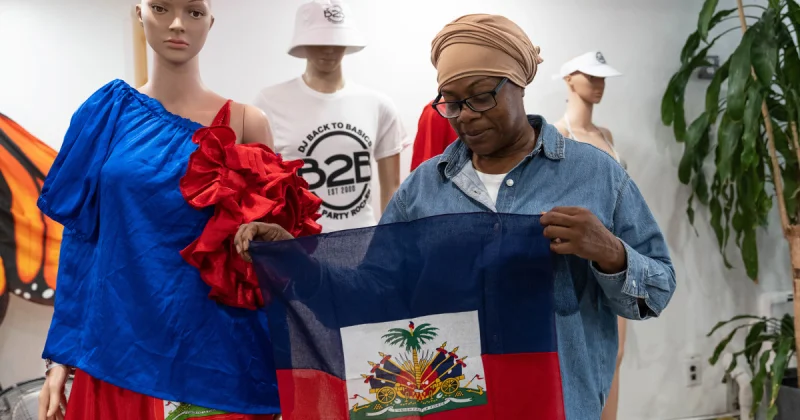
Haitian marchers are heading into Monday’s Labor Day Parade in Brooklyn with less protection and more worry than in past years. The West Indian Day Parade will roll along Brooklyn’s Eastern Parkway as federal immigration enforcement presses harder on Caribbean and other Black immigrant communities and Haitian temporary protected status is gone.
That shift matters now because the parade still expects hundreds of thousands, but for many Haitians it is no longer just a celebration. The Supreme Court ruled 6-3 in Mullin v. Doe in June that federal courts could not review the Trump administration’s decision to end Haitian and Syrian temporary protected status, clearing the way for roughly 350,000 Haitians to lose the protection. A federal judge finalized the order in early August, and work permits tied to Haitian TPS expired on July 27.
For Lespri Ayiti, the pressure is visible on the street and in the budget. The group is marching for the second year and includes about 180 artists, designers, musicians and residents, but it struggled to find float sponsors this year. Natalie Lafontant said the mood is somber, pointing to the loss of TPS, detention centers and people being sent back without a way to support themselves. She said the group keeps going because Haitians use music, dance and art to push through, even when the bill for costumes, insurance and walkers keeps rising.

The parade still lands in a city that has long been a Haitian center. The New York metropolitan area has roughly 163,000 Haitians, the second-largest Haitian population in the U.S. after the Miami metropolitan area, and many settled in Brooklyn neighborhoods including Flatbush, East Flatbush and Crown Heights. Haitians arrived in New York in waves under Jean-Claude “Baby Doc” Duvalier, and more came after his ouster in 1986, building the community that now turns out for this annual march.
That history gives the day a harder edge. Edwina Paul, who left Haiti in 1993 to start a new life with her husband in Brooklyn, is among those carrying the parade’s meaning as both pride and pressure. Haitian organizers describe the march as a defiant celebration, but this year the defiance is shaped by a larger fear: that the country’s public show of joy is unfolding while some of the people who built it are losing the right to stay. What remains unresolved is how many Haitian TPS holders in New York will feel the loss first, and how many will keep marching anyway.
For Haitians, the answer to that question is already on Eastern Parkway. The floats still move, the music still plays and the parade still announces itself as a public refusal to disappear.