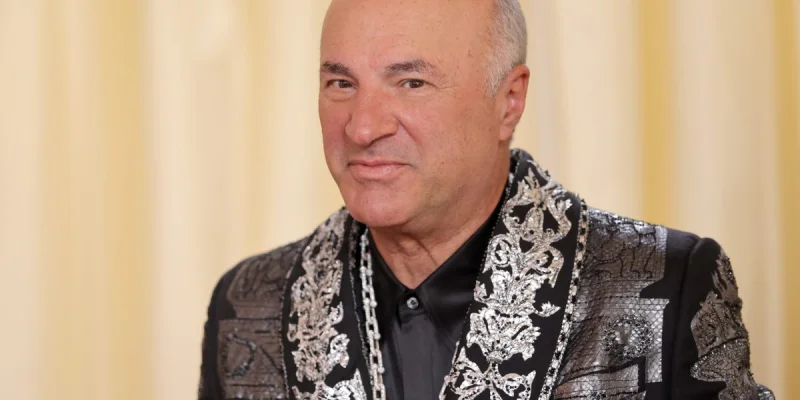
Kevin O’Leary says a worker earning $68,000 a year could become a millionaire by retirement at 65 by saving and investing 15% of every dollar earned. In an Instagram video posted earlier this year, he urged viewers to put the money directly into the market and let compounding do the work.
The math behind the Kevin O'Leary retirement savings rule is simple. At 15%, a $68,000 salary means about $10,200 a year, or roughly $850 a month, going into investments. If that money is invested steadily over a 40-year career from age 25 to 65, it could grow to about $5.3 million at a 10% average return, or around $2.2 million at 7%. On paper, either result clears millionaire status well before retirement.

That is why the rule is drawing attention now. O’Leary’s pitch lands in a moment when saving feels harder for a lot of households. The overall personal saving rate stood at 4.4% of disposable income by mid-2025, according to the Bureau of Labor Statistics, and workers in the $50,000–$79,999 income bracket say they are falling behind on retirement savings at a rate of 55%. Vanguard data puts the median total contribution rate among 401(k) participants at about 11.5%, which is still below O’Leary’s 15% target.
There is also a gap between the rule and the paycheck many people actually take home. For a household earning $68,000 before taxes, take-home pay is about $52,000 to $54,000 after federal and state taxes. From that amount, the usual bills arrive fast: rent averages $1,740 a month, groceries can reach $400 for a single person, student loan payments average $434, and utilities run about $300. O’Leary’s own advice is blunt: don’t spend it, save it, invest it, and do not buy things you do not need. The calculation works if the money is available. The harder question is whether many workers can still find $850 a month after the essentials are paid.
For someone earning $68,000, O’Leary’s rule is less a promise than a test of discipline against the cost of ordinary life. If the contribution rate is applied to take-home pay instead of gross pay, the monthly target falls closer to $650 to $726, depending on the after-tax figure used, but it still asks for a large share of what remains. That leaves the core problem unchanged: the market can compound only after a worker has something left to invest.