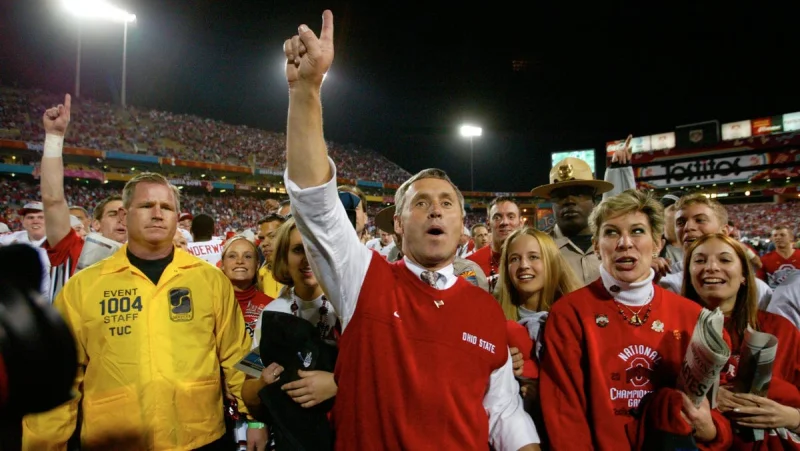
Ohio State will put Jim Tressel in its Ring of Honor on Sept. 5, turning the season opener against Ball State into a stadium tribute for a coach whose name still carries both celebration and dispute. Tressel will join Woody Hayes and Paul Brown as the only Ohio State coaches with a place on the stadium signage.
The timing gives the honor an immediate stage. Fans arriving for the opener will see a coach whose Ohio State record once stood at 106-22 before vacated wins from the 2010 season reduced it to 94-21, and whose teams beat Michigan nine times while winning the 2002 BCS national championship and reaching two other national title games. For Ohio State, the choice is a direct public statement that his success still defines an era.
Tressel’s case rests on more than a trophy count. In Columbus, he delivered a.828 winning percentage over a long run, and his teams turned the rivalry with Michigan into a consistent edge for Ohio State. That résumé is the reason his name now goes up beside two coaching figures who already occupy the most visible space in the stadium.

But the honor also reopens the part of his tenure that ended in pressure and embarrassment. Tressel resigned in March 2011, two months after saying at a March 8 news conference, “I am sincerely saddened I let some people down and didn’t do things as well as I possibly could,” a line that acknowledged fault without erasing the damage. That is why the decision lands with force now: Ohio State is elevating a coach it once watched walk away under scrutiny.
The reaction around him has never been simple. Some people object to the induction because they believe the good-guy image around Tressel was false, while others see a coach whose record and championships make the honor overdue. Ohio State is not trying to separate those truths. It is choosing to put them in the same building.
What happens next is clear enough. On Sept. 5, the Ring of Honor ceremony will place Tressel on the stadium signage with Woody Hayes and Paul Brown, and Ohio State will spend the night answering one question with a gesture: whether a program can celebrate its success while still living with the part of the story that never quite goes away.