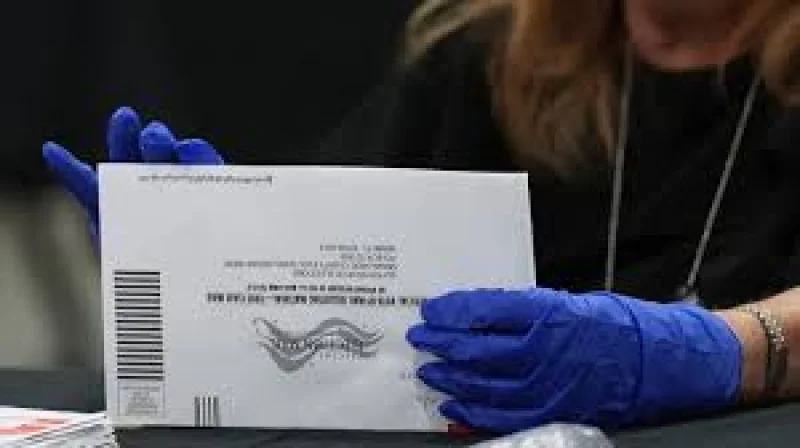
The Justice Department asked the Supreme Court on Thursday to let the Postal Service enforce its mail-ballot rules before the November midterm elections, pressing for action after a district judge blocked the requirements for 14 days.
Solicitor General D. John Sauer asked Justice Ketanji Brown Jackson to move quickly, requesting a response by Tuesday morning as states were already sending ballots in some places and more were due to start mailing them by mid-September.
The appeal puts the justices at the center of a fight over how far the Postal Service can go in regulating ballot mail that moves through its system. Sauer said the rules impose only modest envelope-design and addressee-information requirements for federal-election ballots sent, and argued that the regulation of the U.S. Mail is plainly constitutional. He also said the district court's block nullifies the Postal Service's effort to address the risk of voter fraud through mail voting.

The rules require states and localities to meet design standards for mail ballots, including unique barcodes, and to submit information about residents who will vote by mail to an online portal. That information includes names, addresses and individualized barcodes. Voters covered by the rule would be enrolled with the Postal Service and included on state-specific Mail-In and Absentee Participation Lists, while postal workers would review and verify ballot mail before it is sent. Ballot mailings that do not comply would be returned to election offices.
That push comes with a political edge the administration has not resolved: it says the rule is needed to curb fraud, but it has not put forward evidence of widespread voter fraud. President Trump voted by mail in Florida this year, even as the administration argues that the new requirements are necessary for federal-election ballots sent through the mail.
The dispute is being fought while the calendar is already turning. At least two municipalities in Wisconsin had mailed ballots out by Sept. 3, and North Carolina was set to begin sending mail ballots to certain voters on Friday after that date. More states were expected to begin mailing ballots around mid-September, which means the Supreme Court's handling of the emergency request could shape how election offices process mail votes before the season is fully underway.
Two dozen Democratic-led states and voting rights groups are challenging the legality of the measures, and Justice Jackson has asked them to respond by Tuesday morning. The district court's 14-day block is still in place for now. What happens next is simple and consequential: whether the justices let the Postal Service's rules take effect before the mail-ballot window widens across the country.