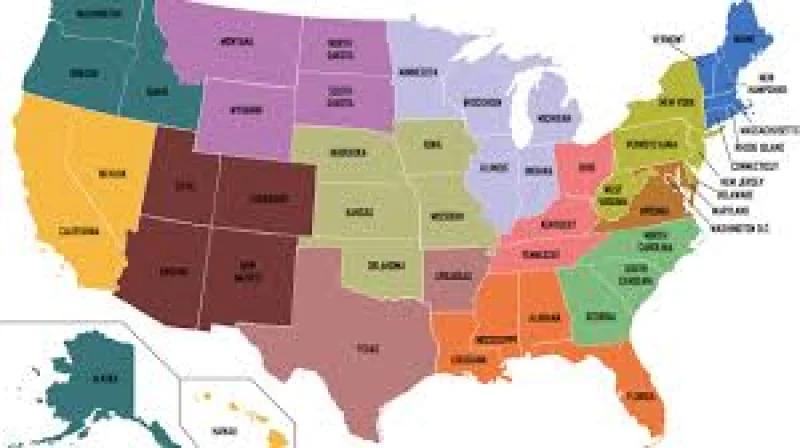
The Old Farmer’s Almanac has published its September long-range weather outlook for the United States, laying out a region-by-region map of temperature and rain patterns for the month ahead. In several places, the forecast leans cooler than average, with one region expected to start the month with showery, cool weather before a brief sunnier stretch and a wetter finish.
That kind of monthly outlook is why readers search for NOAA US temperature forecasts September now, even when the forecast in question comes from The Old Farmer’s Almanac rather than a daily weather report. The Almanac is not trying to pin down what will happen on a given afternoon. It is describing broad conditions for September, measured against historical averages, so people can see whether the month is likely to feel warmer, cooler, drier or wetter than usual.
The Almanac says its long-range forecasts combine solar science, climatology and meteorology. It compares solar patterns and historical weather conditions with current solar activity, and it also weighs climate data and large-scale signals such as El Niño and La Niña. That mix is meant to explain why the outlook is built around seasonal tendencies rather than short-term swings.
In the clearest opening forecast, one region is expected to see showery and cool conditions through September 7, then a sunny but still cool period from September 8 to 11. Rainy periods are forecast from September 12 to 19 before sunshine returns, and showers and cool conditions are expected for the rest of the month. That region’s temperature is forecast at 59 degrees, 2 degrees below average, with 5.5 inches of precipitation, around 2 inches above average.
The Atlantic Corridor is expected to see scattered thunderstorms from September 1 to 12, with warm conditions giving way to cooler weather. Scattered showers are then forecast in the north from September 13 to 23, while the south is expected to remain sunny during that same stretch. During the final week, isolated showers and cool conditions are forecast. The region is projected to average 68 degrees, 1 degree below normal, with 3 inches of precipitation, about 1 inch below average.

The Appalachians open the month sunny and warm before scattered showers bring cooler conditions from September 7 to 12. From September 13 to 23, isolated showers are expected in the north while the south remains sunny, and temperatures are forecast to turn warmer during that stretch. Showers and cool weather follow from September 24 to 27, before the month ends with showers in the north, sunshine in the south and milder conditions. The temperature forecast is 63 degrees, 2 degrees below average, with precipitation around 2 inches below average.
The Southeast is forecast to begin September sunny and mild, then turn stormy before sunshine returns from September 8 to 18. Cooler weather is expected during that same period, followed by another sunny and mild stretch through September 24. The month is then expected to end sunny as cool conditions turn warmer. The region’s temperature is forecast at 74 degrees, 1 degree below average, with precipitation at 2 inches, about 3 inches below average.
Florida starts September with scattered thunderstorms and is expected to turn from warm to cooler through September 11. From September 12 to 20, the north of Florida is forecast to be sunny while the south sees thunderstorms, though temperatures are expected to stay mild across the region during that stretch. Sunshine is forecast to continue in the north through the end of the month, while isolated thunderstorms remain possible in the south. Florida’s temperature is forecast at 80 degrees, 1 degree below average, with 7.5 inches of precipitation, split between 2 inches below average in the north and 2 inches above average in the south.
The forecast’s mix of cooler-than-average regions and warmer, milder pockets is what makes it useful and imperfect at the same time. The Southeast is not simply cool; it is mild for part of the month and only briefly stormy. Florida is not uniformly wet or dry, either. It shifts from warm to cooler, then splits into a sunny north and a stormier south. That is the logic of a long-range outlook: broad regional tendencies, not a promise that every city will feel the same.
For readers trying to plan around September weather, the main takeaway is that The Old Farmer’s Almanac expects a month of uneven conditions rather than a uniform national pattern. The open question is not whether the forecast is detailed — it is — but which of these regional signals will hold when the month actually unfolds.