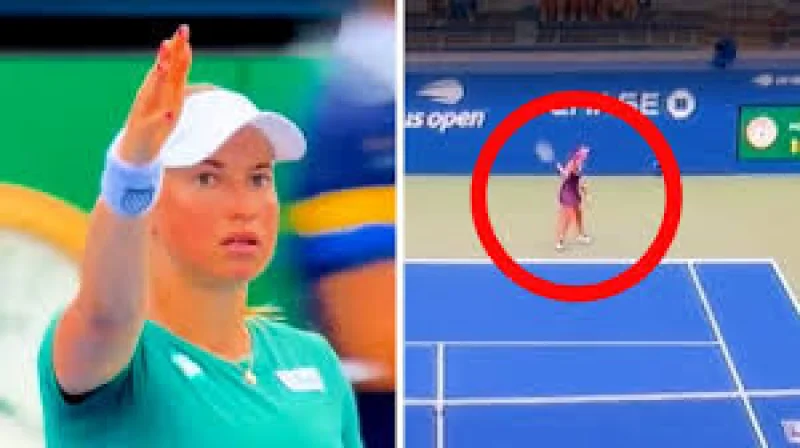
Belinda Bencic’s U.S. Open run ended with a strange and uncomfortable moment: she swatted a ball into the stands, hit a spectator, and was allowed to keep playing after receiving only a code violation. The No. 12 seed later lost to Yulia Putintseva, 4-6, 7-5, 6-3, but the shot that drew the loudest attention came after Bencic had already put herself in position to serve for a 3-0 lead.
The incident happened on U.S. Open Day 3 and quickly became the kind of scene tennis fans recognize because it sits right on the edge of a line the sport has never made easy to define. Bencic led 2-0, 40-Ad before losing that game, then sent the ball behind her without looking. When she realized she had hit someone, she turned immediately to apologize.
Arnaud Gabas, the chair umpire, said Bencic hit the ball outside and struck someone, but not intentionally. He also said the person was fine and that Bencic received a code violation for unsportsmanlike conduct. Putintseva had pointed out the incident to Gabas, and the match went on instead of ending in a default.
That distinction matters because tennis has spent years drawing different punishments for struck-ball cases that look similar from the seats. Novak Djokovic was defaulted at the 2020 U.S. Open after hitting a linesperson in the throat with a ball in frustration during his fourth-round match against Pablo Carreño Busta. Stefanos Tsitsipas hit a ball into the crowd at Wimbledon in 2022 and avoided a default because it missed a fan’s head by inches. In other cases, including an incident involving Alex Michelsen at the Winston-Salem Open and another involving Térence Atmane, the deciding factor was whether the spectator said they were OK. Miyu Kato’s case went further still: she was first given only a warning after accidentally striking a ballkid, then defaulted after her opponents argued that the ballkid’s crying changed the situation.
Bencic’s case lands in that same uneasy space. The act was reckless enough to trigger an unsportsmanlike code violation, but not serious enough, in the umpire’s view, to force her out of the match. That leaves the same unresolved standard tennis keeps returning to: in struck-ball incidents, the punishment often turns less on the swing itself than on whether someone is hurt, and that makes the line between warning and default look far less fixed than the rules are supposed to suggest.