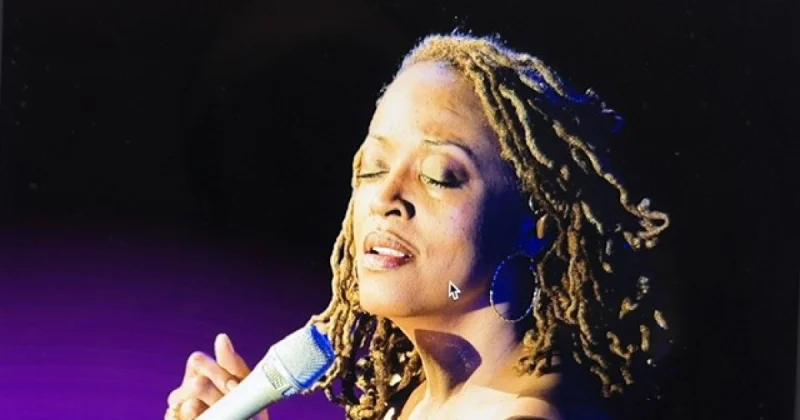
Cassandra Wilson died on September 2 in Jackson, Mississippi, at 70, ending the life of a jazz singer, songwriter and producer who helped push the music beyond its usual borders. Her manager, Robert Torre, said she died peacefully at home, surrounded by family, close friends and him.
That news lands hard because Wilson was never treated as just another strong voice in the field. Gary Giddins called her “a singer blessed with an unmistakable timbre and attack who has expanded the playing field,” and that is the measure of her reach: she made space for blues, country and folk inside a jazz frame without sounding like she was borrowing from anywhere at all.
For people who knew her early, the loss is personal as well as musical. Dorthaan Kirk said Wilson called her Mother Kirk, and she remembered taking her to Lush Life in Greenwich Village, where Wilson first visited a jazz club in New York City. That kind of memory explains why this death has moved so quickly through the circles that knew her as both an artist and a person trying to find her place.

Her career had already begun to take shape long before the wider acclaim arrived. Wilson began playing piano at six, picked up guitar by twelve and was working as a vocalist by the mid-'70s. Gary Walker first met her in Newark in 1982, when she and Anthony Wilson had just moved to New York from the South and she told him she was a jazz singer determined to test her mettle in the jazz capital of the world.
What made her stand out was not just ambition but range. After moving to New York City in the early 80's, Wilson met saxophonist Steve Coleman and became one of the founding members of the M-Base Collective. In 1992, she signed with Blue Note Records and released Blue Light 'Till Dawn, a record that fit her habit of refusing hard category lines and confirmed the voice that listeners came to recognize immediately.
That same refusal gave the music its tension. Wilson could sound intimate and smoky while moving between standards, re-imagined songs and material that crossed into other American traditions. Walker said there were no boundaries for what she explored, and Kirk said she sensed something special in the feeling of Wilson’s presentation long before the wider audience caught up.
For now, the family is asking for privacy, and no further arrangements have been announced. That leaves the last word to the record Wilson already made: a career that widened jazz’s frame, then ended without warning on September 2.