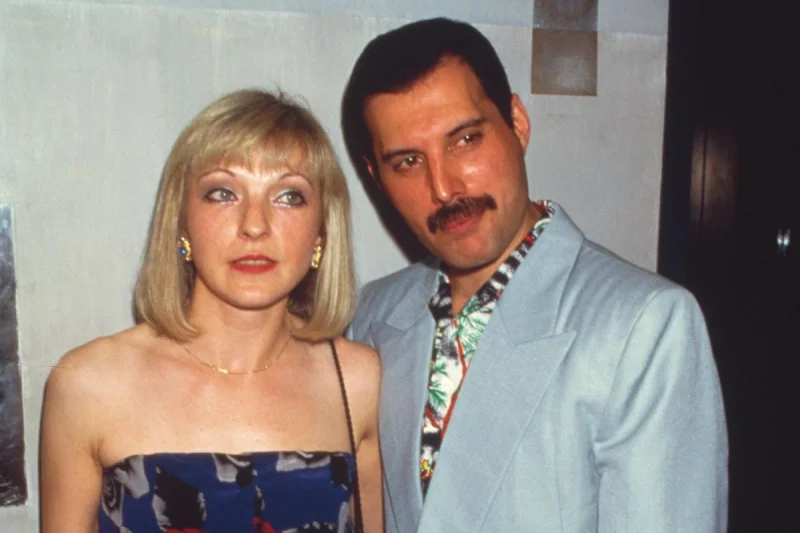
Mary Austin is publishing Freddie Mercury: A Life in Lyrics, a book built around the handwritten lyrics she found in one of four silver trunks she had kept untouched in her attic since the mid-1980s. She opened the trunk in 2022, saw it was crammed with Mercury’s songs, and shut it again.
“To say I was overwhelmed is an understatement,” Austin said. “I couldn’t look at the lyrics.” The material included Don’t Stop Me Now, Killer Queen, We Are the Champions and Bohemian Rhapsody, all in Mercury’s original scratchy hand, and the book combines those pages with photographs and Austin’s observations. It lands this week, when Mercury would have turned 80.
The timing gives the project extra force. Mercury, born Farrokh Bulsara 80 years ago this week, met Austin in 1970 after she had become a friend of Brian May’s and was working at Biba, while he was running a clothes and textile stall in Kensington Market in London after his graphic art and design degree. By then, the pair had already formed the bond that would define both of their lives. Mercury was gay and Austin was strictly heterosexual, but he appeared to regard her as the one person in the world he could wholly trust.

That trust is part of why the trunks matter so much. Austin has guarded Mercury’s private belongings since his death in 1991 aged 45, has lived in his house for more than 30 years and owns half of his estate, which has risen from an estimated £20-30m to around £150m. The handwritten lyrics belonged to Austin, and when she opened the trunk she did not leaf through them alone. She asked her two sons to sift through the treasures for her, a choice that kept the archive within the family while leaving the emotional weight to someone else.
That closeness has not stopped fans from accusing her of hoarding Mercury’s treasures and withholding basic truths about his legacy, especially around his ashes. Yet the fact remains that Mercury seems to have placed his deepest private world in Austin’s hands, and she has kept it there. Jamie, her younger son, was born a couple of months after Mercury died in 1991, a reminder that the archive Austin tends belongs to a life that ended before his own family life had really begun.
The book now turns that private history into the public record, but not by emptying the trunks. Austin opened one, recoiled, and closed it again, which says as much about what Mercury left behind as any polished tribute could. What remains unresolved is not whether she has access to his legacy, but how much of it she has chosen to reveal, and how much she will still keep sealed when Freddie Mercury: A Life in Lyrics reaches readers.