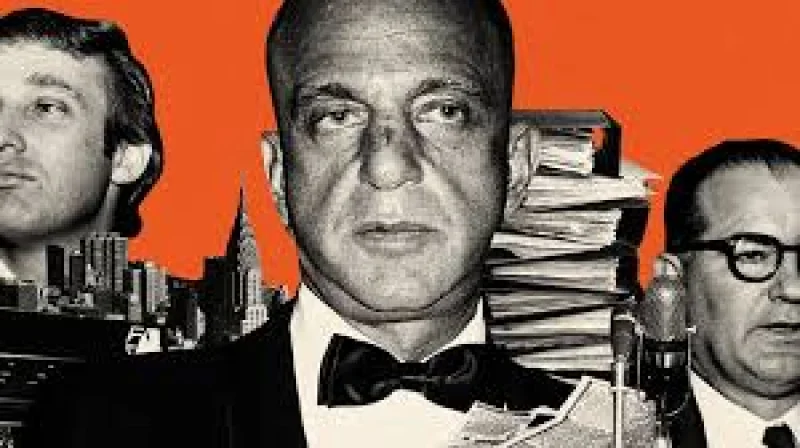
Kai Bird and Susan Goldmark published American Scoundrel on Tuesday, putting Roy Cohn back at the center of a story that reaches from Joe McCarthy to Donald Trump. The new biography lands with a blunt claim: Cohn was not just a fixer in New York, but the man who helped shape Trump’s style, his instincts and the way he talked about power.
That is why the book is drawing attention now. Bird says Trump publicly admires Cohn and still misses him, and Trump has been making that point for years, asking in 2017, “Where’s my Roy Cohn?” The book presents Cohn as a New York mob lawyer who guided Trump through the cutthroat world of New York real estate from the mid-70s to the mid-80s, long enough to leave a mark on how Trump learned to profit from ties to organized crime, stay a step ahead of the law and lie without admitting wrong or defeat.
Bird tried to widen the audience before publication. He said he asked his publicist to reach out to hosts and reporters, Joe Rogan and Steve Bannon, but got little traction. Rogan looked at the galleys and told Bird’s publicist, “I’m not interested.” Bird also won a Pulitzer Prize for American Prometheus, and he has been treating this book as a major new account of one of the most durable figures in modern political mythology.

The sharper value in the book is not just the broad portrait of Cohn but the way Bird says Trump described their connection differently when Bird called him four times on his personal number. Trump told Bird that Cohn recognized him at Le Club in Manhattan in 1973. Bird says that account came out upside down from the version Trump had given in The Art of the Deal and earlier interviews, and that mismatch sits at the center of the book’s claim that Trump has spent decades telling a version of his own origin story that flatters the man he became.
Bird said one of the more revealing moments came when he raised Cohn’s politics. He asked Trump whether he knew Cohn had voted for Jimmy Carter in 1976. Trump answered, “Ah, that’s unbelievable. Why would he do that?” Bird said Cohn had grown fed up with the old guard Republican party symbolized by Gerald Ford, and Trump replied, “Oh, I can understand that. That makes sense.” When Bird brought up Cohn’s later disillusionment with Carter over the Panama canal treaty, Trump shot back, “Yeah, that was a terrible deal! What a terrible deal!”
Bird said Trump also kept trying to turn the conversation to promotion, telling him, “Oh, terrific, maybe I can promote it. Anything I promote goes to number one.” Trump added, “Of course, it would have to be fair.” That line matters because it captures the book’s larger point: Cohn may be gone, but the habits Bird links to him are not. American Scoundrel does not just reopen a biography. It gives Trump’s old mentor a new afterlife, and the most pointed question now is whether the book’s portrait of that relationship changes how Trump’s own first chapter in New York is read.